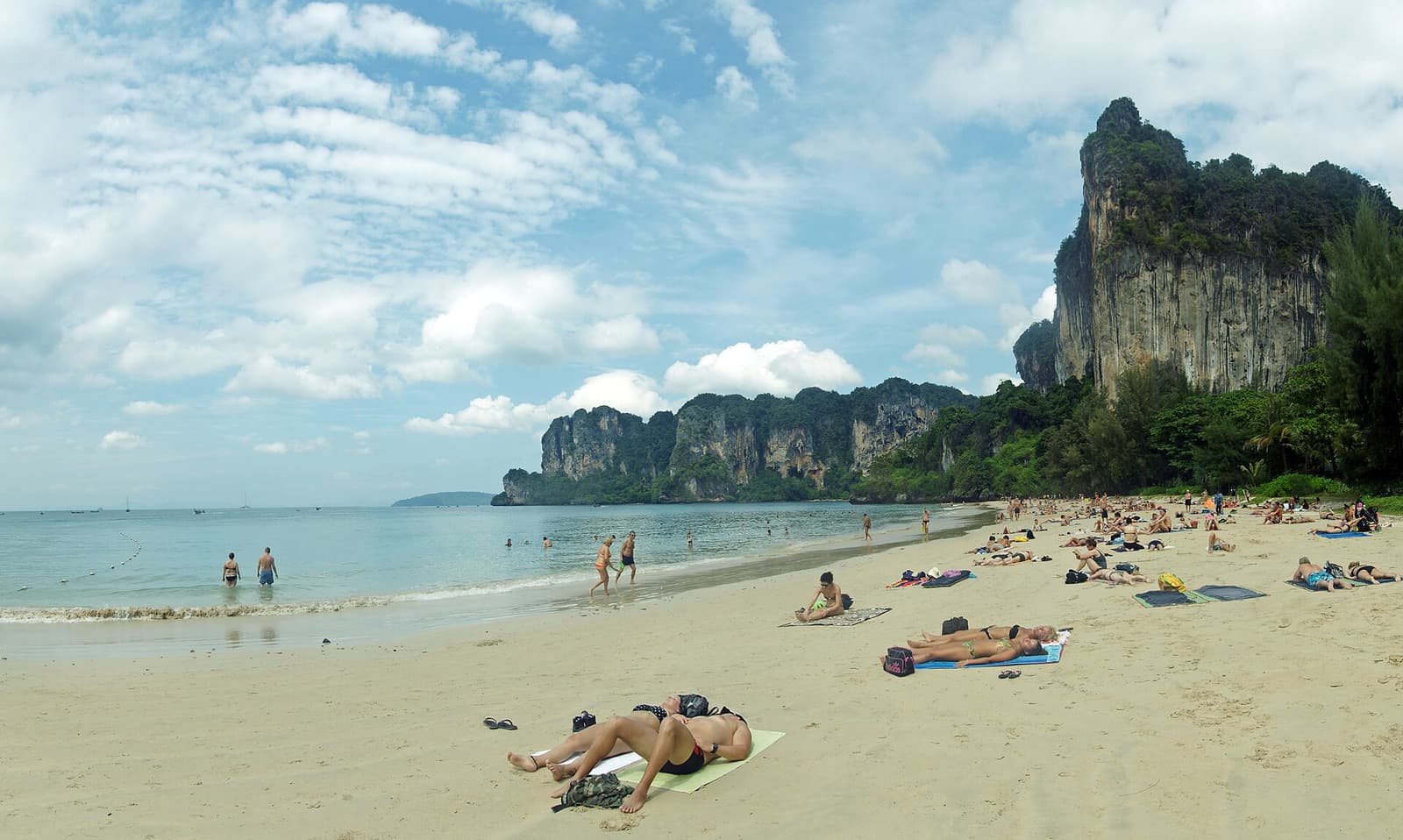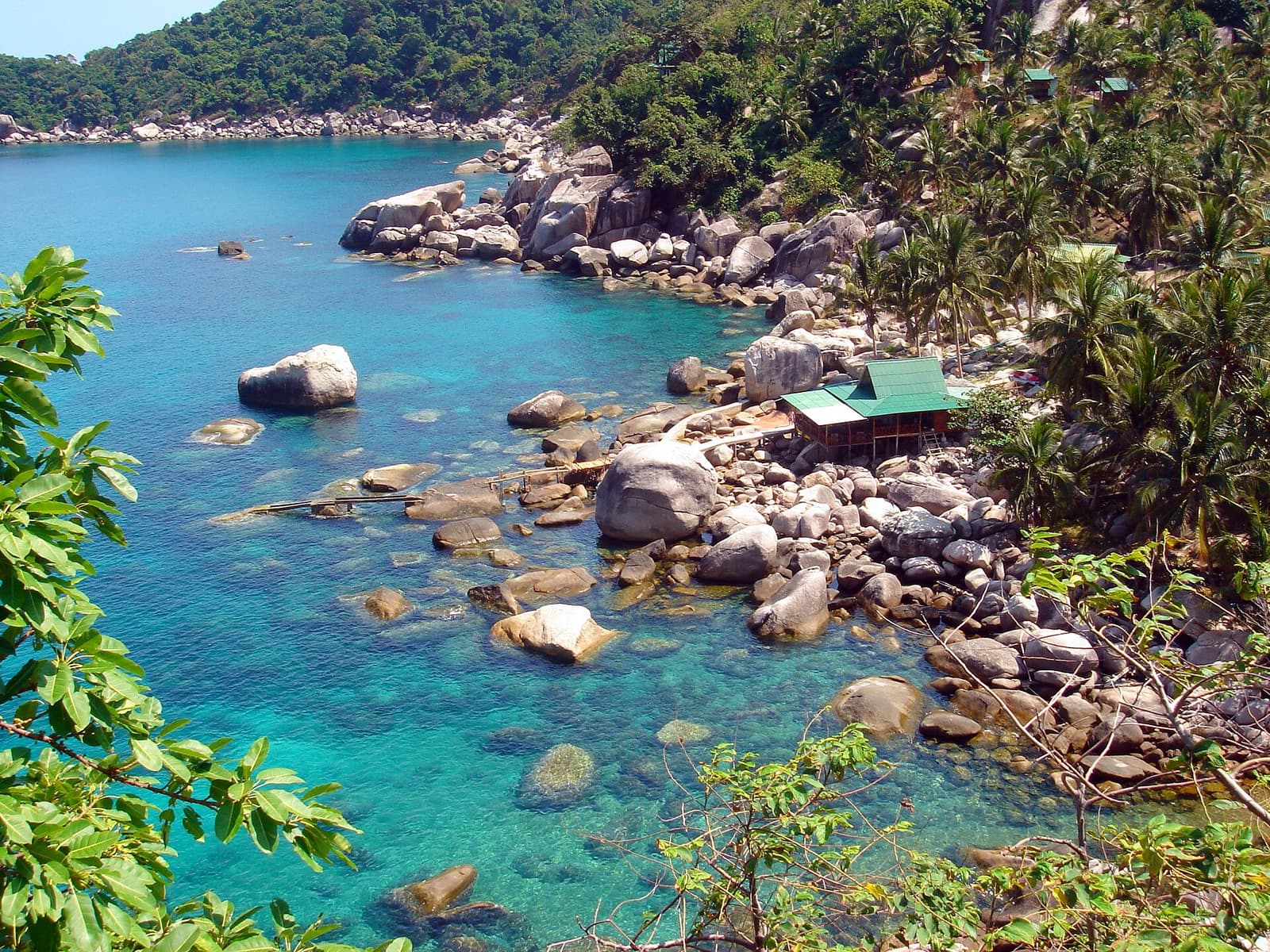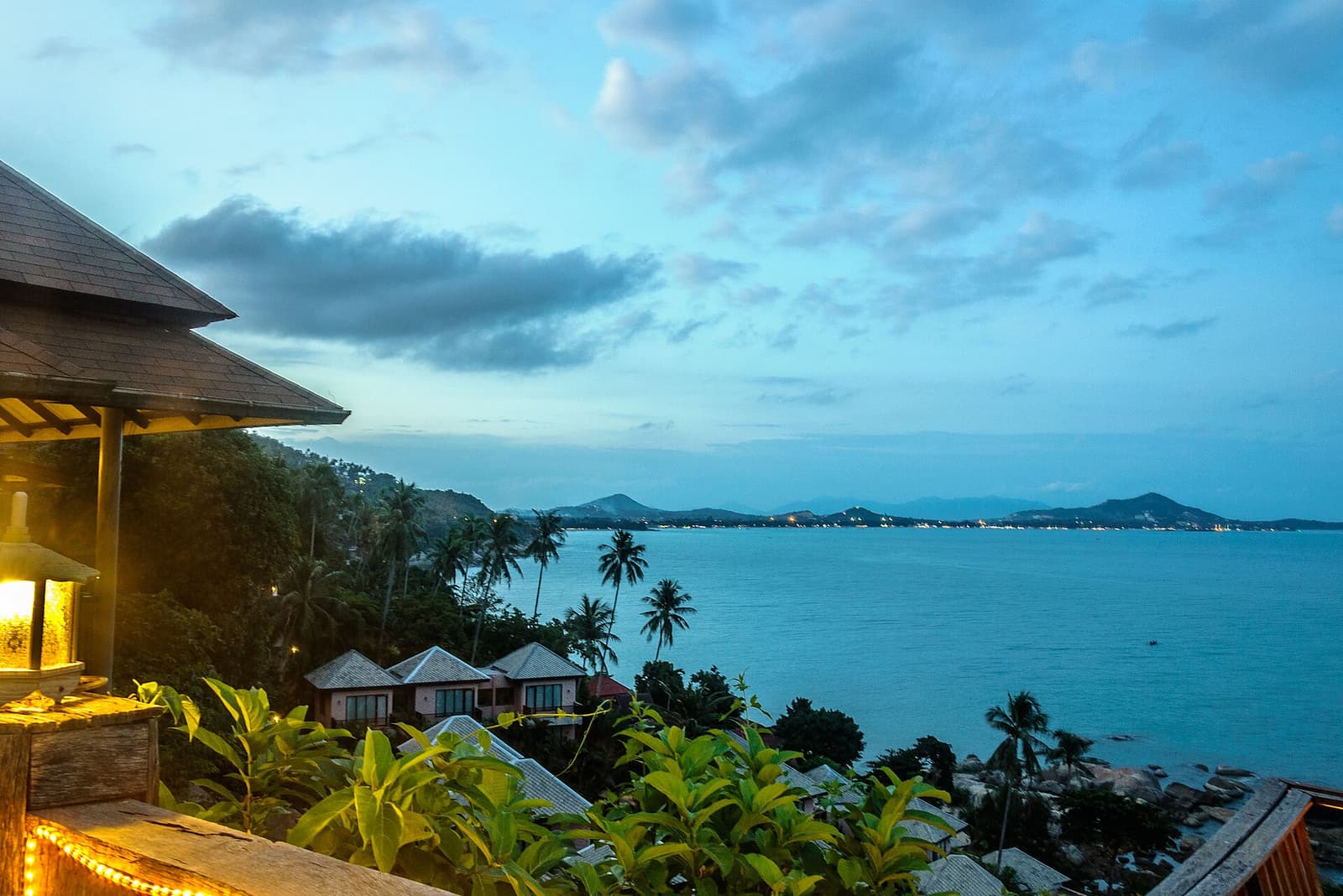
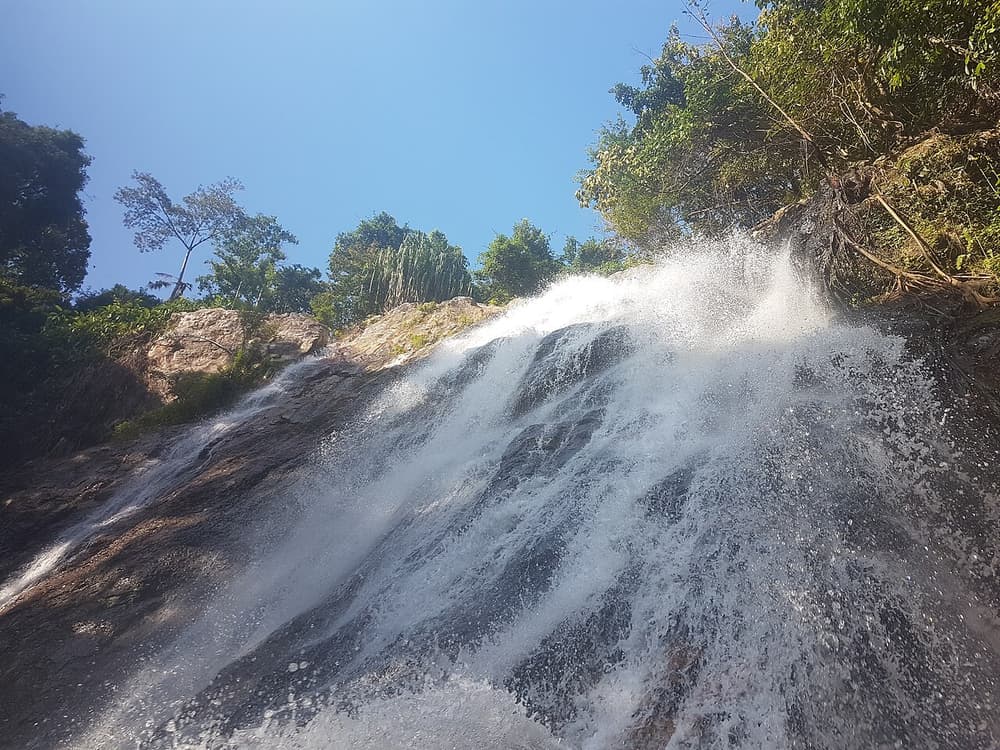
Koh Samui is the developed one: an island ringed by a 50 km road, with an airport, resort beaches at Chaweng, Lamai and Bophut, and a mountainous interior of coconut and durian plantations cut by waterfalls. Koh Phangan, half an hour north by catamaran, is known worldwide for the Full Moon Party at Haad Rin; away from that one beach it is greener, steeper and quieter, with jungle hikes, boat-access bays and a large yoga and wellness community.
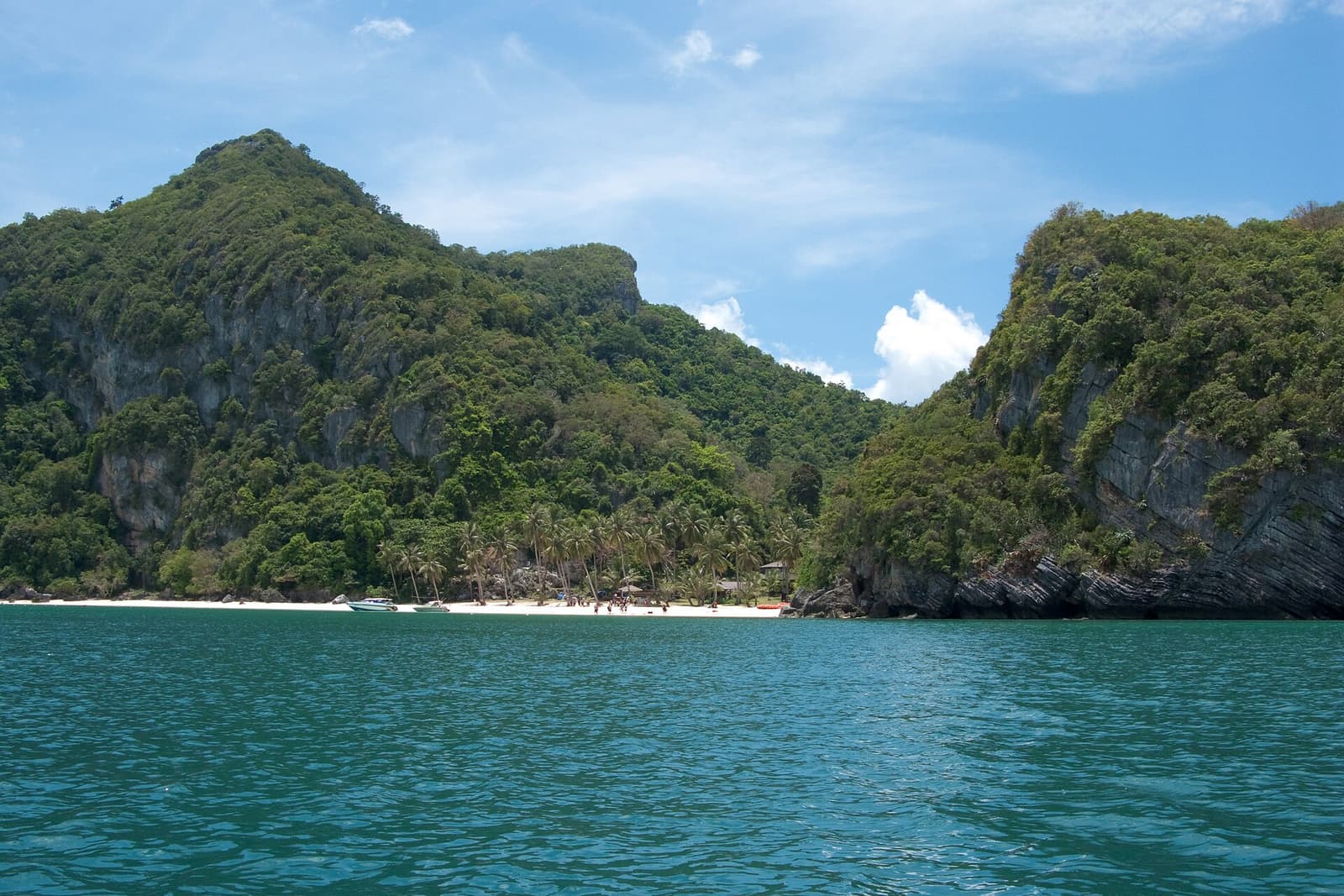
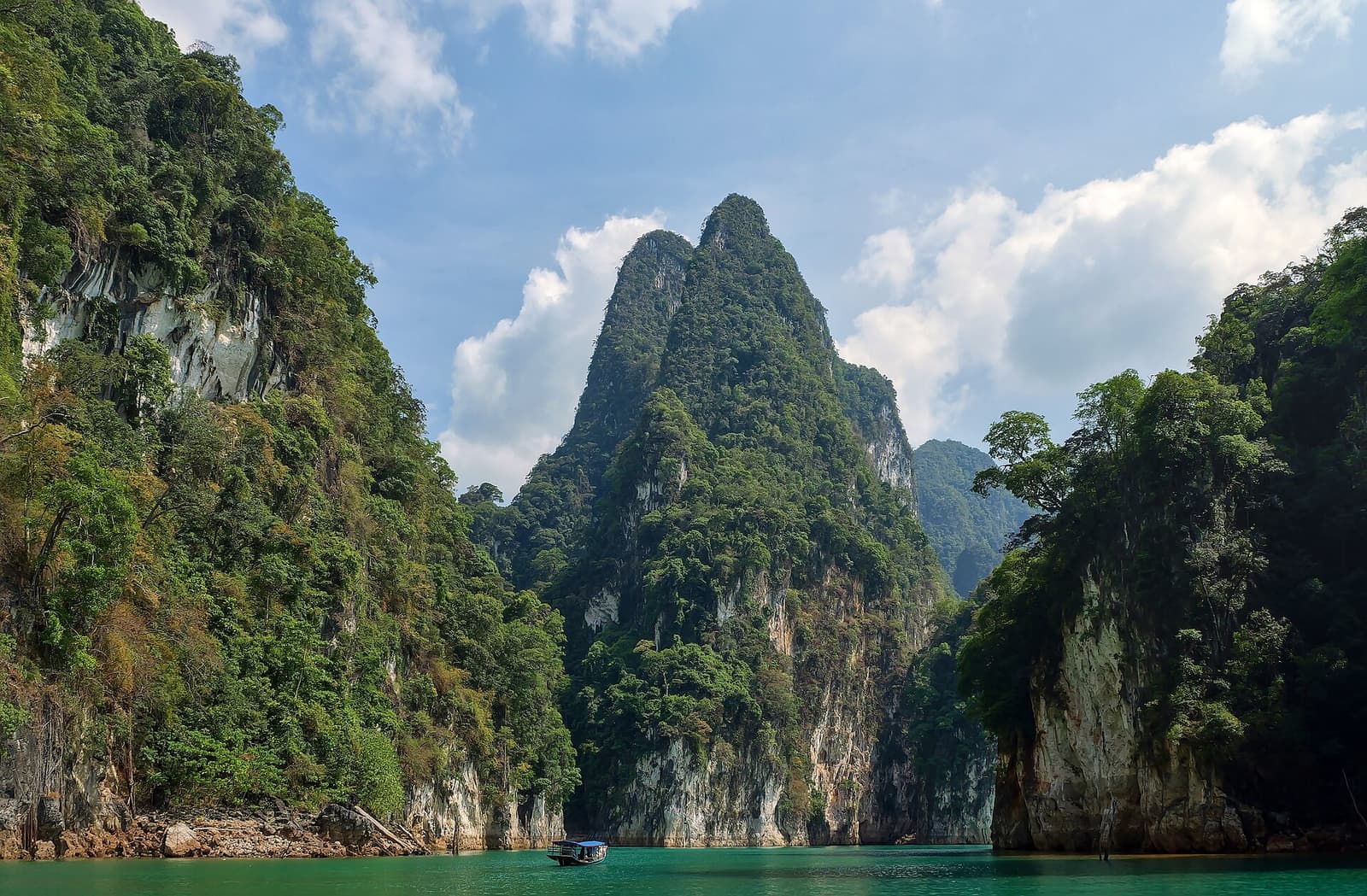
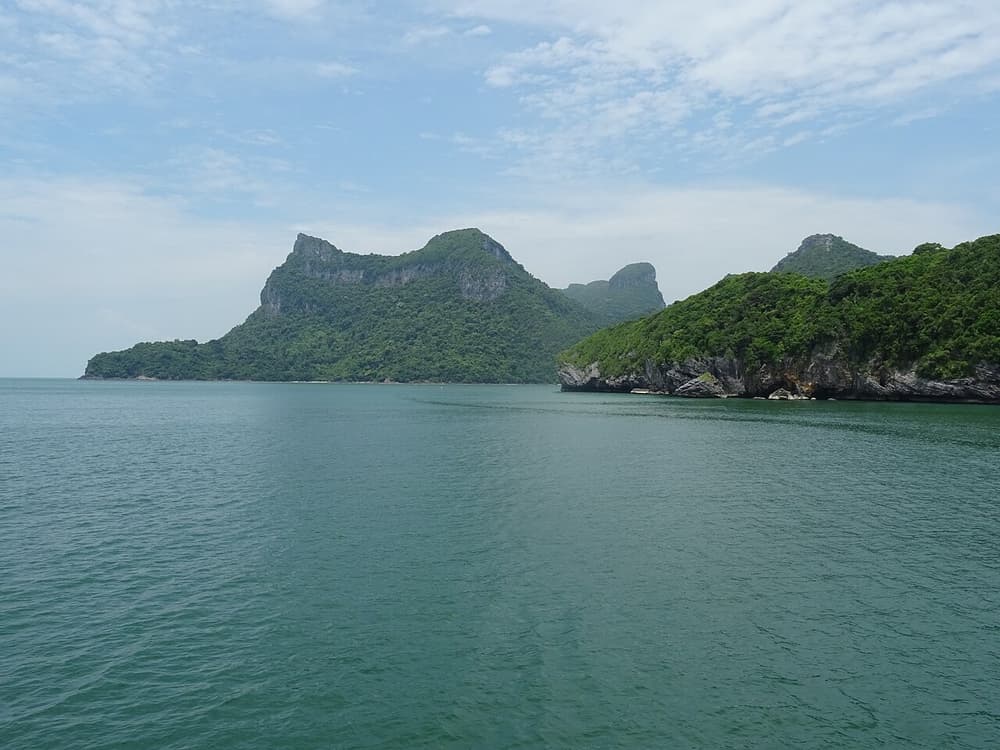
West of both lies Mu Ko Ang Thong, a national marine park of 42 limestone islands. Day boats bring visitors to paddle sea kayaks under cliffs and through arches, climb a steep trail to a famous viewpoint and look down into an emerald saltwater lake. To the north, Koh Tao is the diving island, and the pinnacle of Sail Rock between Phangan and Tao is the Gulf’s best single dive.
The Gulf has its own weather. Its driest months run from about February to September, which makes these islands the natural choice in the European summer.
Highlights
- Kayak and snorkel among the islands of Ang Thong Marine Park
- Climb to the Ko Wua Talap viewpoint over the archipelago
- Swim beneath the Na Muang waterfalls
- Hike over the headland to Bottle Beach on Koh Phangan
- Watch muay thai at a Samui stadium
- Ride quad bikes or 4x4s through Samui’s jungle interior
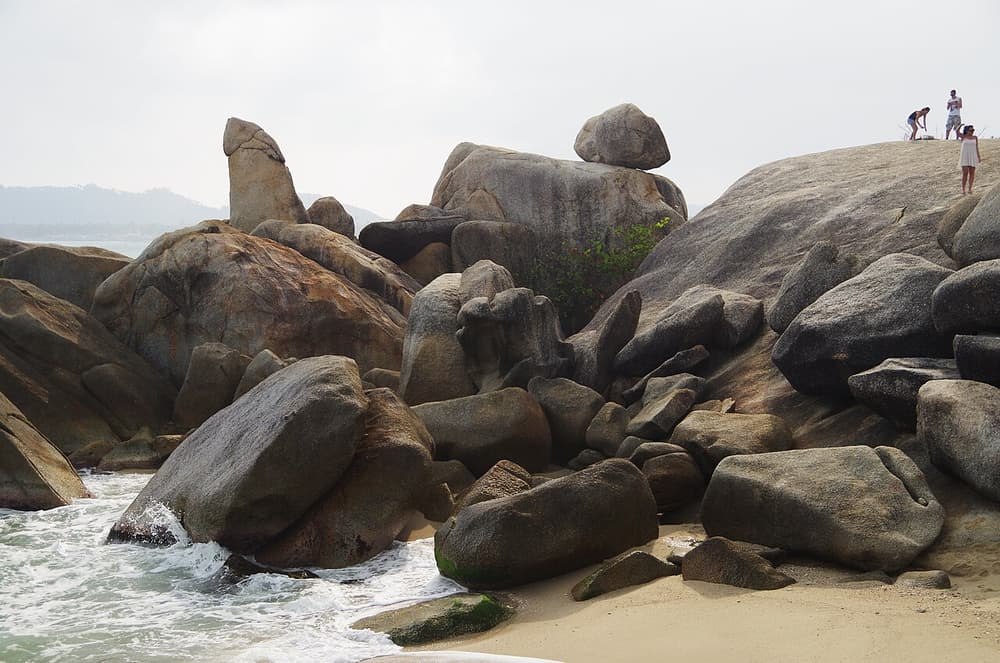
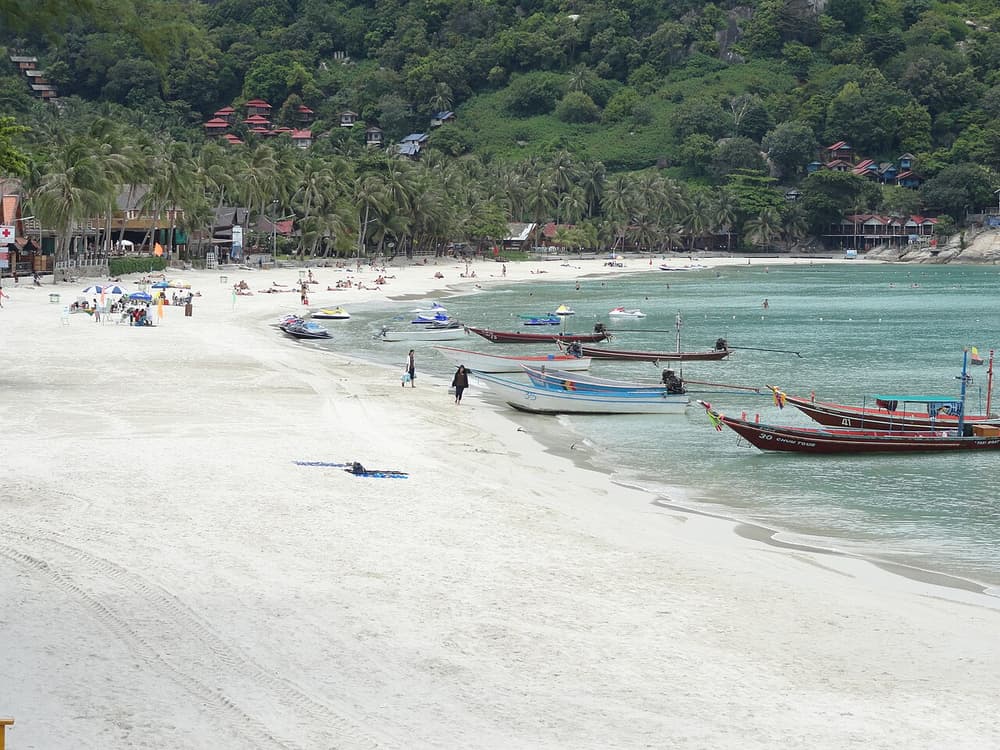
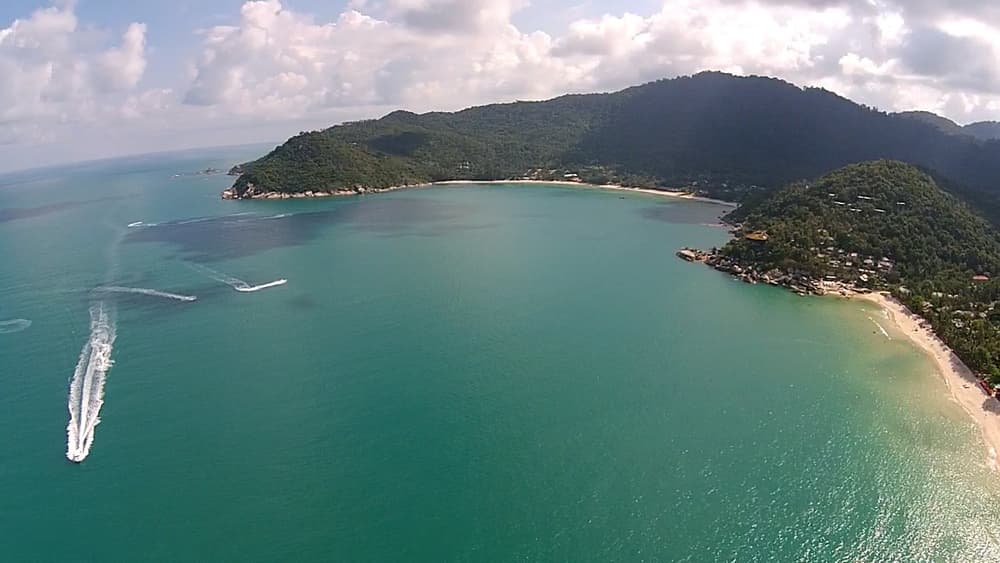
Koh Samui & Koh Phangan in pictures
How long to stay and where to base yourself
Allow three or four days on Samui — an Ang Thong day, an interior day and beach time — and two or three on Phangan. Add Koh Tao for a classic three-island route.
On Samui, Bophut and its Fisherman’s Village are the pleasant middle ground and close to the piers; Chaweng is the busiest strip; Lamai is a little calmer; Maenam and the south and west coasts are quiet. On Phangan, Thong Sala is the port, Haad Rin the party beach, the west coast has sunset beaches and yoga schools, and the north and east — Chaloklum, Bottle Beach, Thong Nai Pan — are the most beautiful and remote.