- International gateways
- Domestic flights
- Trains
- Buses and minivans
- Ferries and island boats
- Cars, scooters and local transport
- Linking the destinations
International gateways
Most visitors arrive at Bangkok Suvarnabhumi (BKK), one of Asia’s major hubs, with direct flights from Europe, the Middle East, Australia and across Asia. Bangkok Don Mueang (DMK) is the base for low-cost carriers. Phuket (HKT) has direct long-haul and regional flights, especially from November to April, and Chiang Mai (CNX), Krabi (KBV) and Koh Samui (USM) receive regional international services. Flying into one airport and out of another — into Chiang Mai and out of Phuket, say — often saves a day.
Entry rules, including visa-free stays and the digital arrival form, are covered in the travel guide.
Domestic flights
Thailand’s domestic network is dense and competitive. Flights from Bangkok to Chiang Mai, Chiang Rai, Phuket, Krabi and Surat Thani take 1 hour 10 minutes to 1 hour 30 minutes, and there are useful cross-country routes that avoid Bangkok, such as Chiang Mai–Phuket and Chiang Mai–Krabi. Low-cost fares are cheap if booked ahead, but check baggage allowances — dive and climbing gear adds up — and note which Bangkok airport your flight uses.
| Route | Flight time | Notes |
|---|---|---|
| Bangkok – Chiang Mai | About 1 h 15 min | Very frequent, from both airports |
| Bangkok – Chiang Rai | About 1 h 20 min | Several daily |
| Bangkok – Phuket | About 1 h 25 min | Very frequent |
| Bangkok – Krabi | About 1 h 20 min | Frequent |
| Bangkok – Surat Thani | About 1 h 15 min | Budget gateway for Khao Sok and the Gulf islands |
| Bangkok – Koh Samui | About 1 h 15 min | Fewer airlines, higher fares |
| Chiang Mai – Phuket / Krabi | About 2 hours | Daily; skips Bangkok |
Trains
The State Railway of Thailand runs four main lines from Bangkok’s Krung Thep Aphiwat Central Terminal. They are slow but comfortable, cheap and scenic, and the overnight sleepers save a hotel night.
- Northern line to Chiang Mai (10–13 hours), via Ayutthaya.
- Southern line to Chumphon (for Koh Tao), Surat Thani (for Khao Sok, Samui and Phangan) and on towards Malaysia.
- North-eastern line via Pak Chong, for Khao Yai.
- Kanchanaburi line from Thonburi station over the River Kwai to Nam Tok.
Second-class sleeper berths, with or without air conditioning, are the standard choice; first class has two-berth cabins. Book through the railway’s official D-Ticket system or at any station, up to several weeks ahead for popular trains.
Buses and minivans
Long-distance buses reach everywhere the trains do not. “VIP” services have reclining seats and run overnight on the longest routes. Minivans cover distances up to about four hours — Chiang Mai to Pai, Krabi to Khao Sok, Surat Thani to the piers — and are fast, frequent and cramped; put large bags in the hold space and expect to pay for an extra seat if yours will not fit. Tickets are sold at bus stations, by guesthouses and through online agencies.
Ferries and island boats
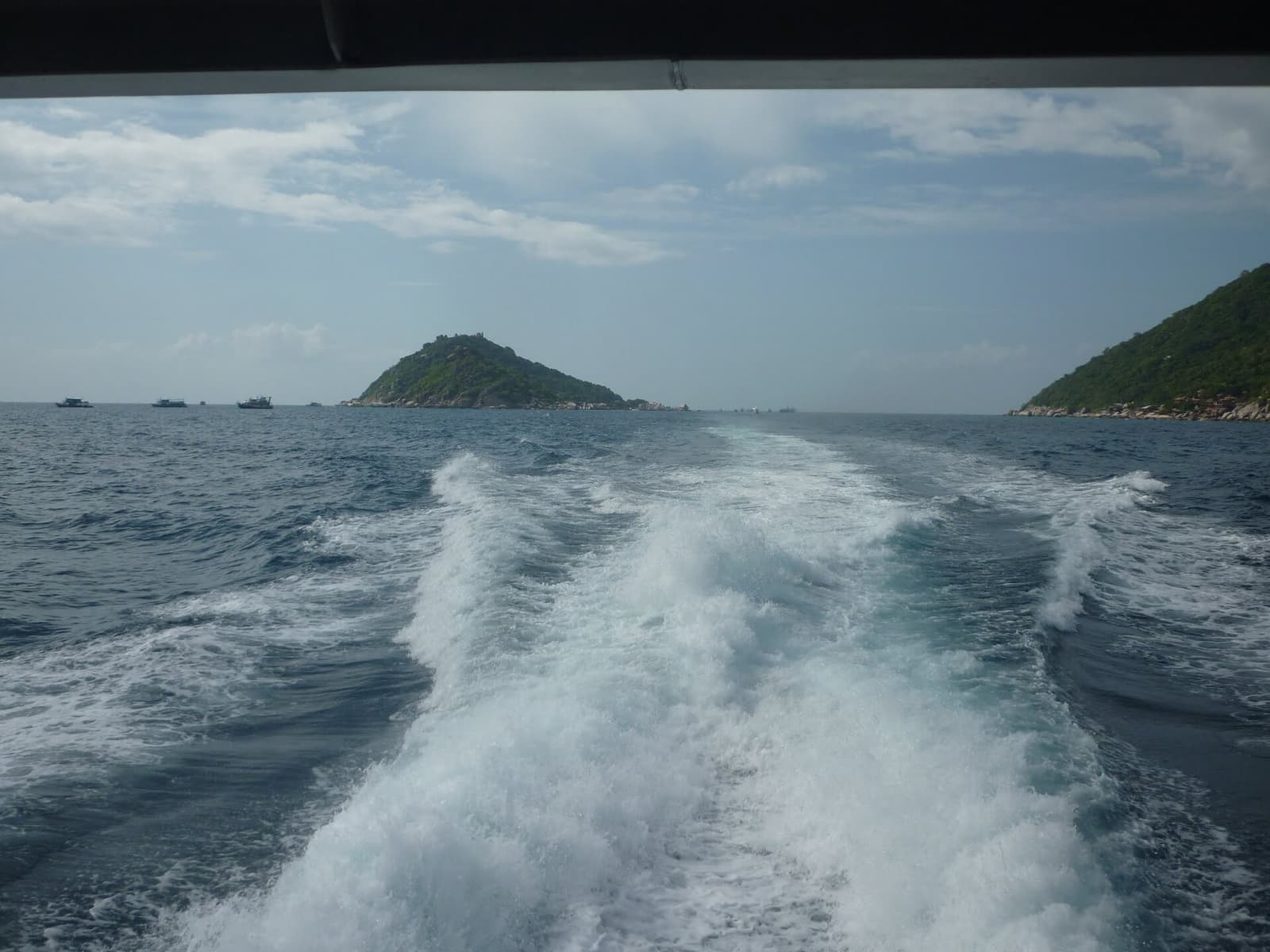
On the Andaman coast, ferries and speedboats link Phuket, Koh Phi Phi, Krabi/Ao Nang, Railay and Koh Lanta. The timetable is fullest from November to April; in the monsoon some routes stop and crossings can be rough. On the Gulf, car ferries run from Don Sak to Koh Samui and Koh Phangan, and high-speed catamarans connect Chumphon, Koh Tao, Koh Phangan and Koh Samui several times a day, with disruption most likely in November.
Joint tickets combining bus, transfer and boat are the simple way to cross between coasts or reach the islands from an airport. Keep valuables with you, pack electronics in a dry bag, and take seasickness tablets before rough crossings rather than during them.
Cars, scooters and local transport
Thailand drives on the left. Car hire is straightforward at airports and useful for Khao Yai, Kanchanaburi and the northern loops; you need your licence plus an International Driving Permit. A car with a driver is often not much dearer and far more relaxing.
Scooters are offered to every tourist and are the single biggest source of holiday injuries. To be legal and insured you need a motorcycle licence valid in Thailand; a car licence is not enough. If you ride, wear a helmet, avoid the steep island roads, and never leave your passport as a deposit.
In towns, use ride-hailing apps, metered taxis in Bangkok, shared songthaews (pick-up trucks with benches) in Chiang Mai and on the islands, and longtail boats wherever there is water.
Linking the destinations
Typical journey times between our twelve bases. Each destination’s own Getting there page has more detail.
| From → to | Best way | Time |
|---|---|---|
| Bangkok → Chiang Mai | Flight or sleeper train | 1 h 15 min / 10–13 h |
| Chiang Mai → Pai | Minivan | About 3 h |
| Chiang Mai → Chiang Rai | Bus | 3–3.5 h |
| Bangkok → Kanchanaburi | Bus, minivan or train | 2.5–3 h |
| Bangkok → Khao Yai | Car, or train to Pak Chong | 2.5–3.5 h |
| Phuket → Khao Sok | Bus or minivan | 3–3.5 h |
| Khao Sok → Krabi | Minivan | 2.5–3 h |
| Krabi → Koh Phi Phi | Ferry | 1.5–2 h |
| Krabi → Koh Lanta | Minivan with car ferries | 2–3 h |
| Khao Sok → Koh Samui | Minivan and ferry via Don Sak | 4–5 h |
| Koh Samui → Koh Tao | Catamaran | 2–3 h |
| Koh Tao → Bangkok | Catamaran to Chumphon, then train or bus | 10–12 h |