- Elephants: no riding, no shows
- Other wildlife
- Marine parks, reefs and fees
- Choosing your coast by monsoon
- Forests, trails and caves
- People and communities
- Plastic, water and energy
Elephants: no riding, no shows
Thailand has several thousand captive elephants, most of them descended from animals that worked in logging until it was banned in 1989. Tourism now pays for their keep, and how visitors spend their money shapes how they live.
We do not recommend elephant riding in any form — with or without a seat — nor shows, painting, football or street begging. Training for these relies on harsh methods, and carrying people day after day damages animals that are not built for it.
What to look for instead:
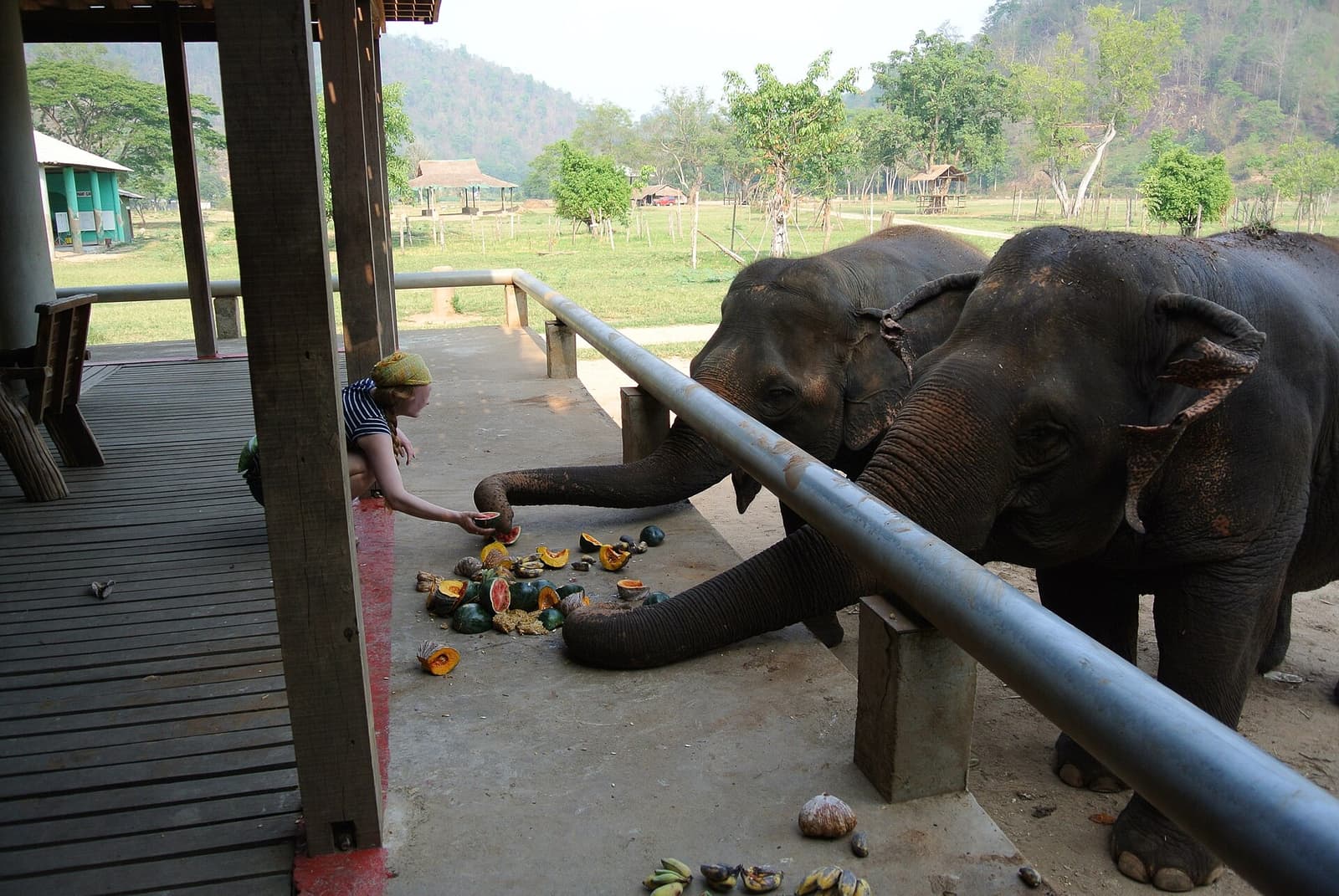
- Observation first. The best sanctuaries let elephants roam, forage and socialise while visitors watch from a respectful distance and perhaps prepare food.
- Limited contact. Feeding by hand is generally low-stress. Bathing with tourists is increasingly questioned, because it forces repeated interaction; many leading sanctuaries have stopped it. Where there is a choice, choose not to.
- Small groups, few sessions a day, no bullhooks in use, no chains on show during visits, and no babies separated from mothers for photographs.
- Honest claims. “Sanctuary”, “rescue” and “ethical” are not regulated words. Read recent reviews for what actually happens.
Every elephant experience listed on this site states that there is no riding; we note where a listing includes bathing so you can decide.
Other wildlife
- Tigers. Avoid any attraction that offers photographs with tigers or cubs.
- Monkeys. Do not feed macaques at temples, beaches or on kayak trips, even if a guide offers food. Fed monkeys become aggressive, and bites require rabies treatment.
- Photo props. Decline pictures with slow lorises, gibbons, iguanas or birds of prey on beaches and walking streets; these animals are taken from the wild.
- In national parks, keep your distance, keep quiet, stay on trails and never use flash on nocturnal animals. In Khao Yai, give elephants on the road at least 30 metres.
- Souvenirs. Do not buy ivory, coral, shells, turtle shell or animal skins.
Marine parks, reefs and fees
Most of Thailand’s famous islands lie inside national marine parks: the Similan and Surin islands, Ao Phang Nga, Hat Noppharat Thara–Mu Ko Phi Phi, Mu Ko Lanta, Mu Ko Ang Thong and others. Foreign adults pay an entry fee, typically between 200 and 500 THB per park per day, often in cash and sometimes on top of the tour price. The money funds rangers, moorings and facilities; keep the ticket, as it can be valid for more than one site on the same day.
The parks also set rules and closures that visitors sometimes find inconvenient and that are, in fact, the reason the reefs are recovering:
- Seasonal closures. The Similan and Surin islands close from mid-May to mid-October. Maya Bay closes for a recovery period each year and bans swimming. Ang Thong usually closes for several weeks around November. Dates are announced annually.
- Visitor caps apply at the Similans and Maya Bay; book ahead in peak season.
- Sunscreen. Sunscreens containing oxybenzone, octinoxate, 4-methylbenzylidene camphor or butylparaben are banned in marine national parks. Use a mineral, reef-safe product — or wear a rash vest and leggings.
- No touching, no feeding, no taking. Do not stand on or hold coral, chase turtles or sharks, feed fish or collect shells. Fines are enforced.
- Buoyancy. If you are learning to dive, ask your instructor for extra practice hovering off the bottom; fins do more damage than anything else.
Choosing your coast by monsoon
Travelling with the seasons is itself responsible travel: it keeps you off rough seas and spreads visitors more evenly. From about May to October, the south-west monsoon makes the Andaman Sea rough; boats to outlying islands are cancelled at short notice, and beaches fly red flags. In those months, base your sea days on the Gulf islands. From October to December the pattern reverses. Never pressure a boatman to go out against advice, and treat a cancelled trip as the system working. Details in when to go.
Forests, trails and caves
- National parks on land charge foreign visitors 100–400 THB. Hire local guides where they are offered: it is income for nearby villages and you will see far more.
- Carry out everything you carry in. Single-use plastic and foam containers are banned in national parks.
- Stay on marked paths and do not light fires; northern forests are tinder-dry from February to April.
- Respect cave closures in the rainy season. Flash floods in river caves have killed visitors.
People and communities
- Hill villages. Visit with operators who employ guides from the communities and stay overnight where you can, so that money reaches households. Ask before photographing people, dress modestly and accept hospitality graciously.
- “Long-neck villages”. The villages of Kayan women shown to tour groups in the north are widely criticised as human zoos. We suggest skipping them and say so wherever a listed tour includes one.
- Buy local. Eat at family restaurants, hire local boatmen and choose locally owned lodges where the choice exists.
- Children. Do not give money or sweets to children or visit orphanages as an attraction.
Plastic, water and energy
Refill a bottle at the water stations found in most guesthouses and cafés, refuse bags and straws, and take part in a beach or reef clean-up — dive schools on Koh Tao, Phi Phi and Lanta run them regularly. Fresh water is scarce on small islands: short showers and reused towels matter. For long distances, the sleeper train is a low-carbon alternative to a domestic flight and a pleasure in its own right.