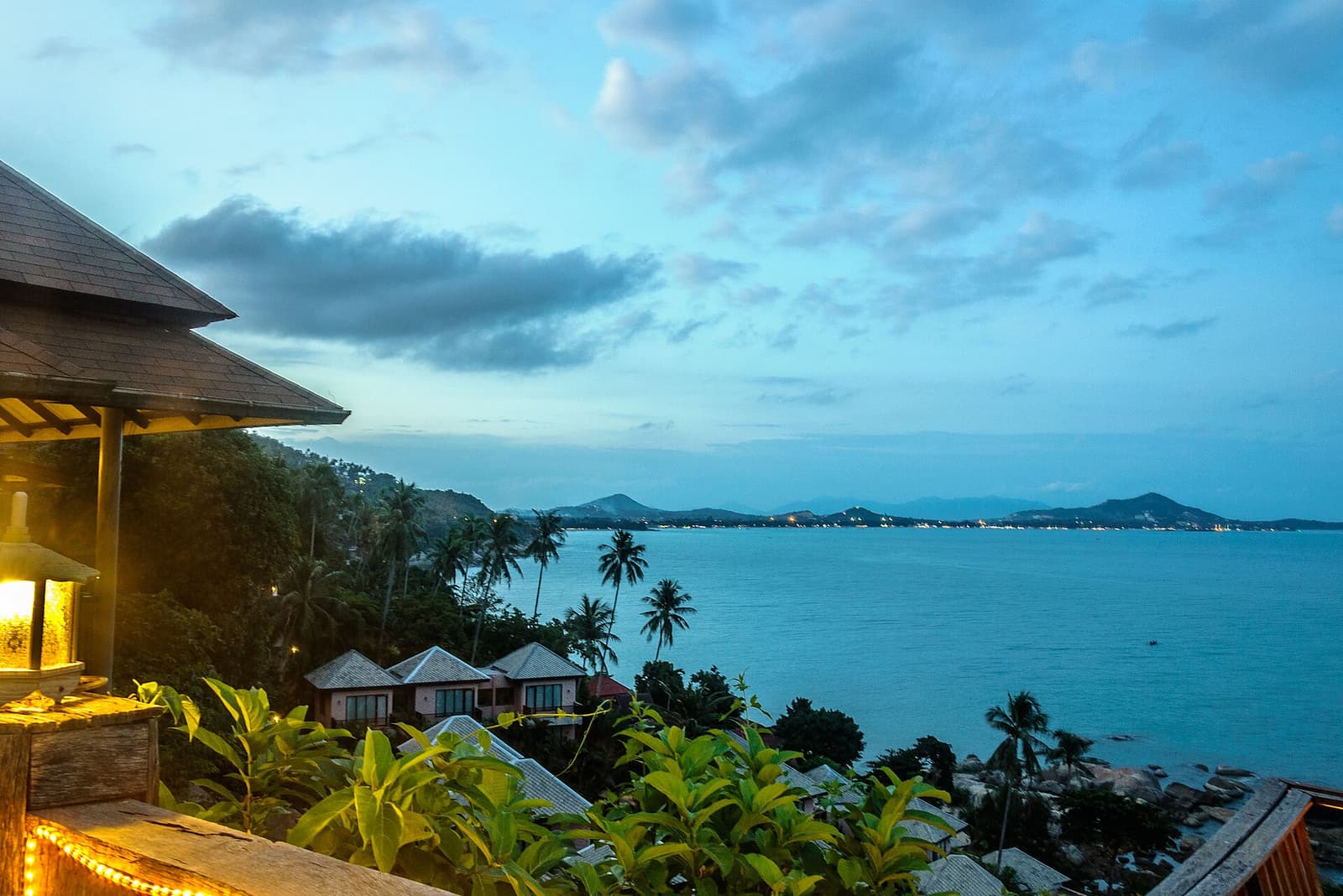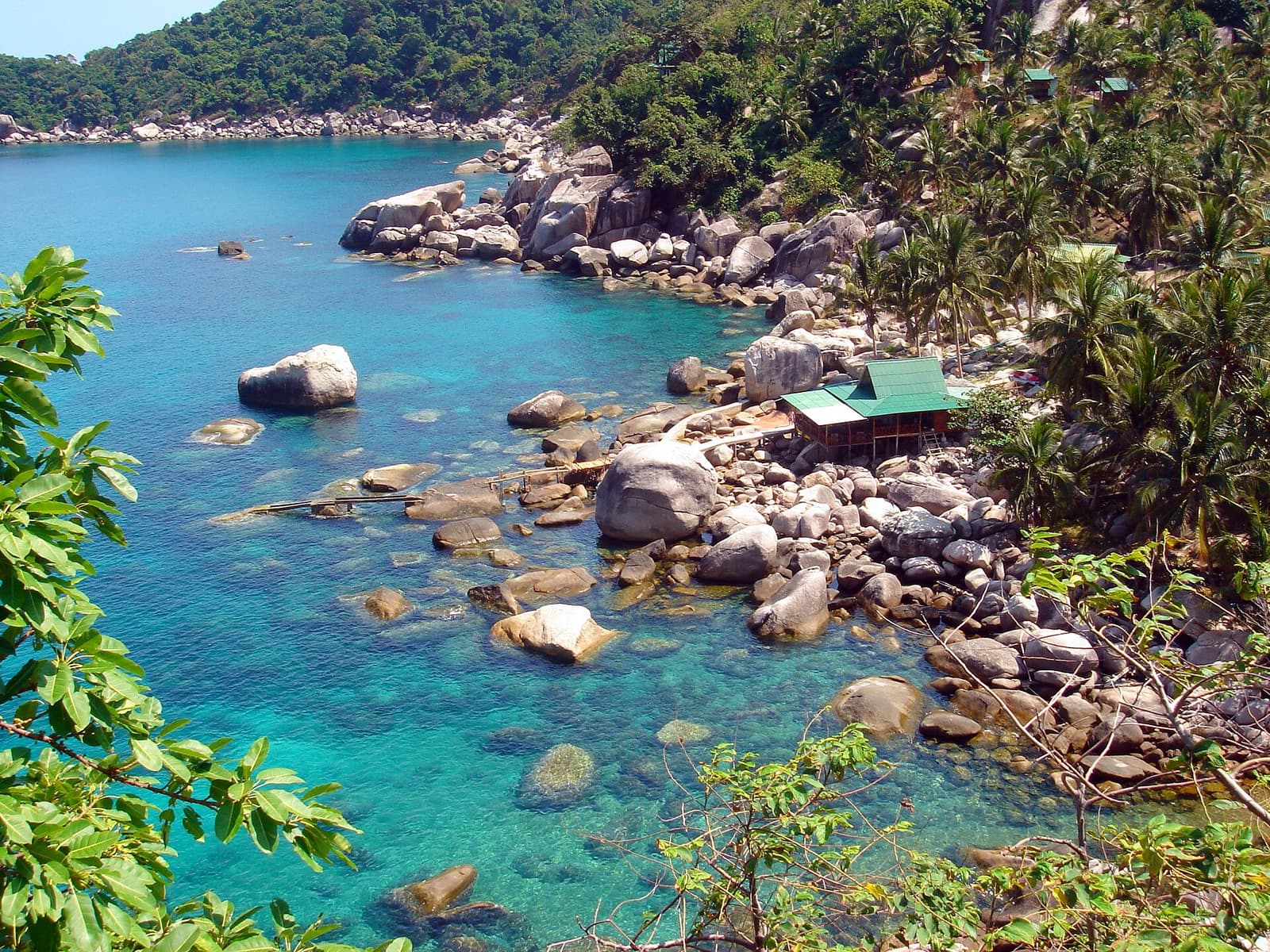
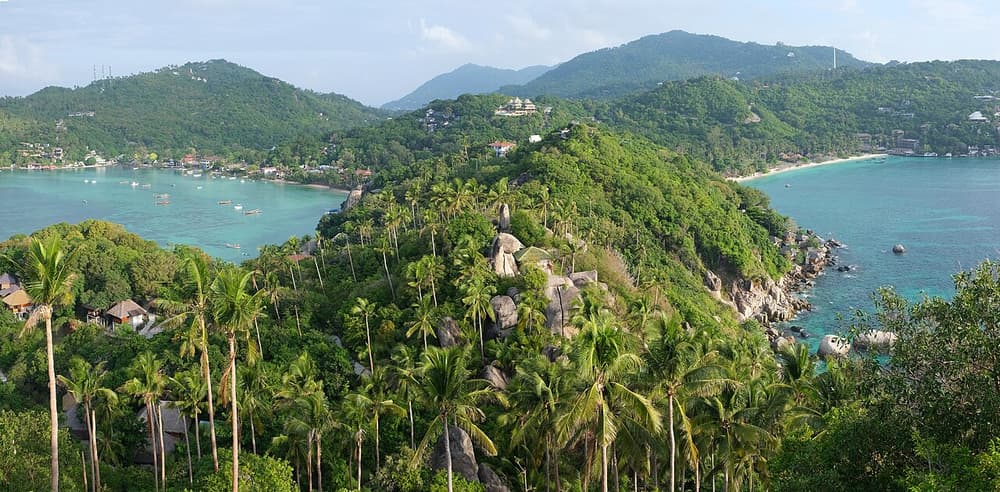
Koh Tao is the smallest and most northerly of the three main Gulf islands, about 21 square kilometres of forested hills and boulder-strewn bays, two to three hours by catamaran north of Koh Samui. It has no airport and little in the way of sights in the usual sense. People come to be in the water.
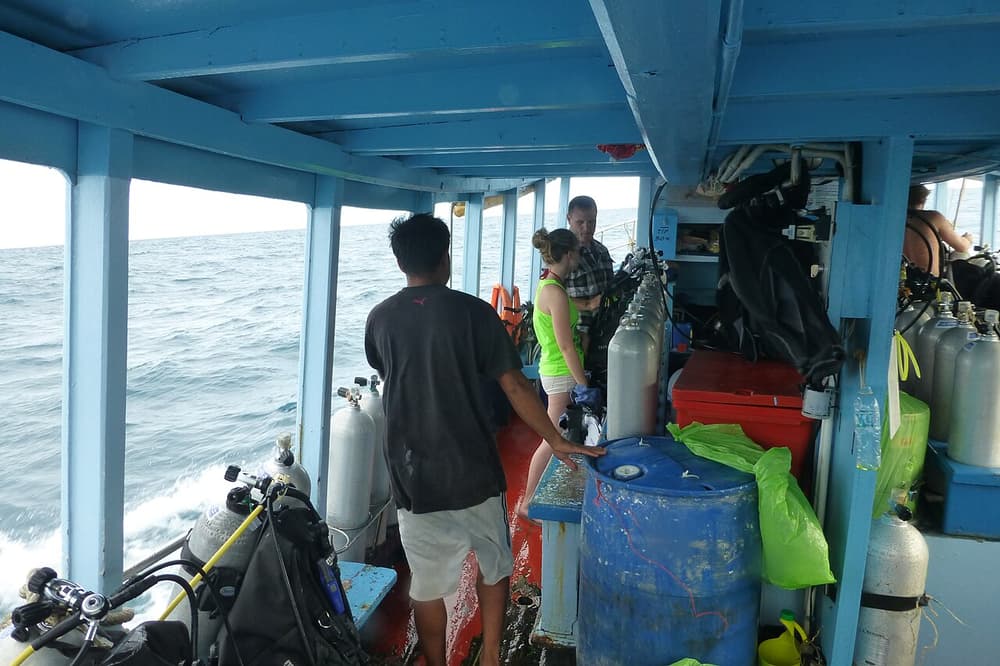
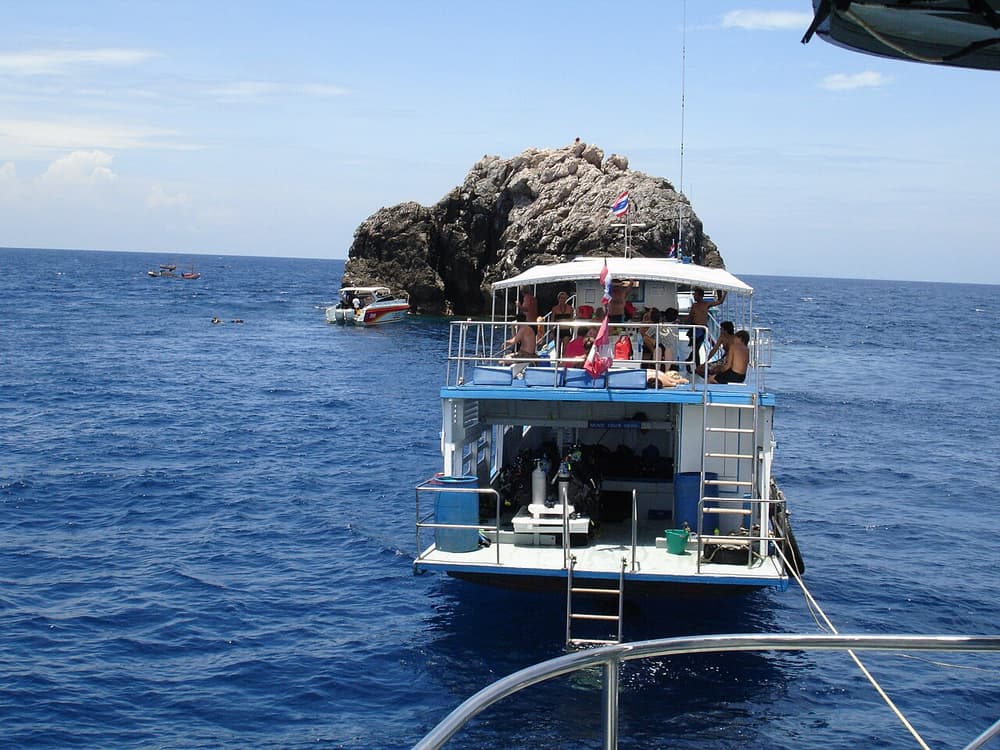
Calm, warm, shallow bays, short boat rides to the reefs and dozens of competing schools have made it one of the world’s least expensive places to learn to dive. An Open Water course takes three to four days; a try-dive takes one. Beyond the beginner sites lie proper dives — the granite spires of Chumphon Pinnacle and Southwest Pinnacle, the wreck of the HTMS Sattakut, and Sail Rock on the way to Phangan — where whale sharks turn up from time to time.
You do not need a tank to enjoy it. Snorkellers meet green turtles and young blacktip reef sharks in a metre or two of water at Shark Bay, freediving schools teach breath-hold diving, and trails climb to viewpoints over the whole island. Most visitors arrive via Koh Samui and Koh Phangan or from Chumphon on the mainland.
Highlights
- Take a try-dive or earn your Open Water certification
- Snorkel with turtles and blacktip reef sharks at Shark Bay
- Climb to the viewpoint over Koh Nang Yuan’s triple sandbar
- Dive Chumphon Pinnacle with a chance of whale sharks
- Hike to the John-Suwan viewpoint at the island’s southern tip
- Circle the island by longtail, bay by bay
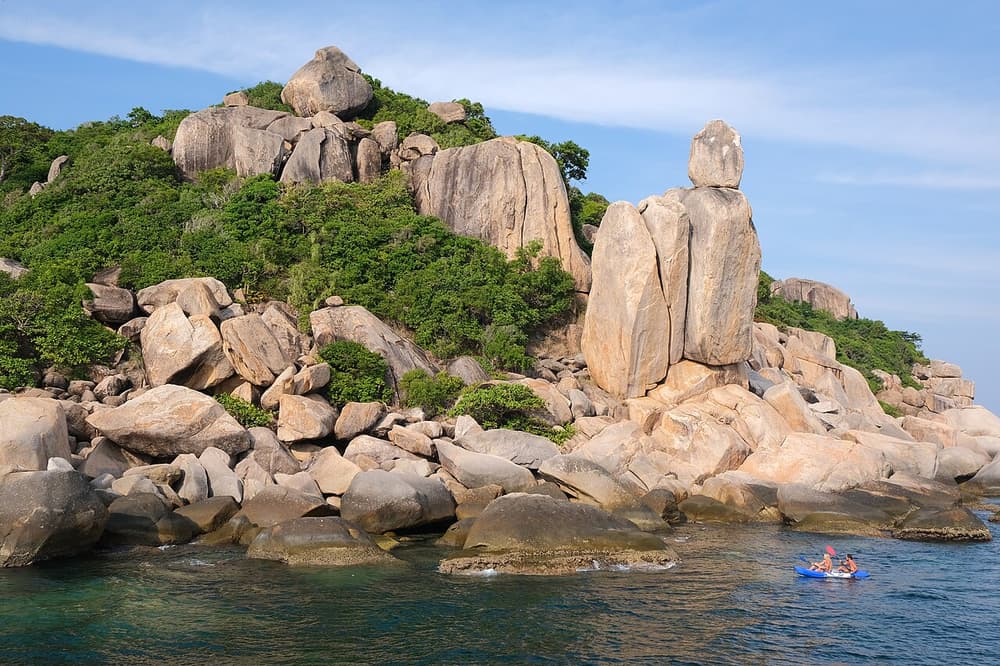
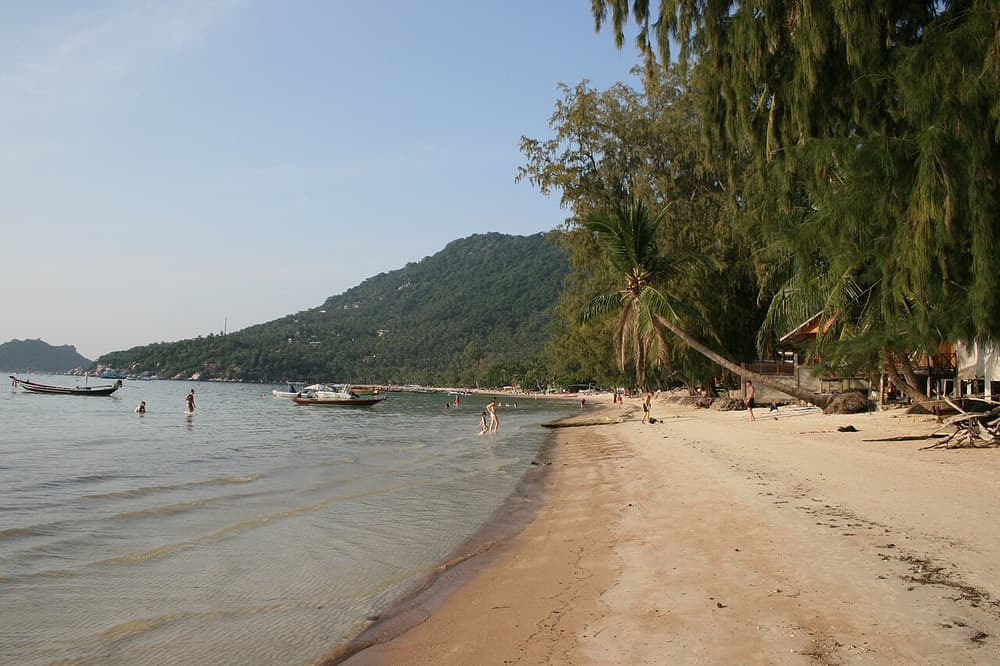
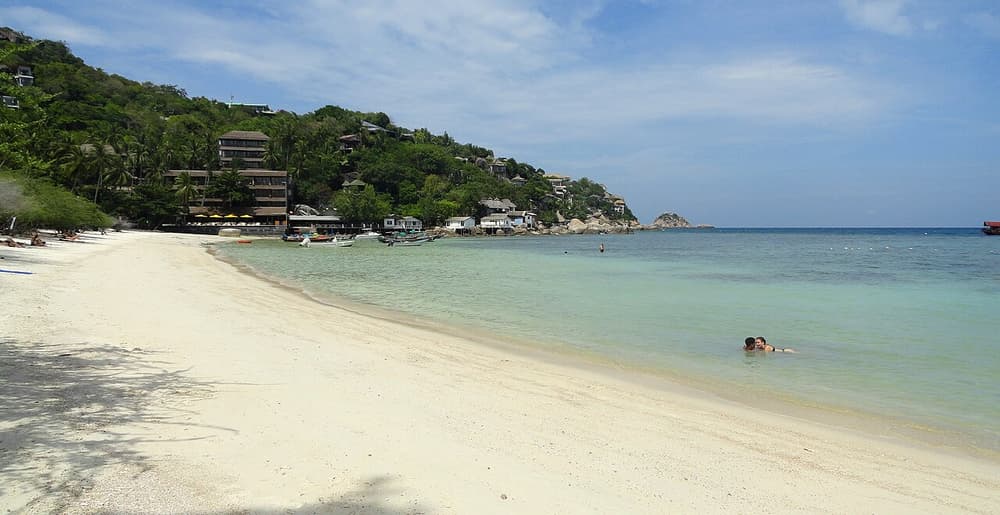
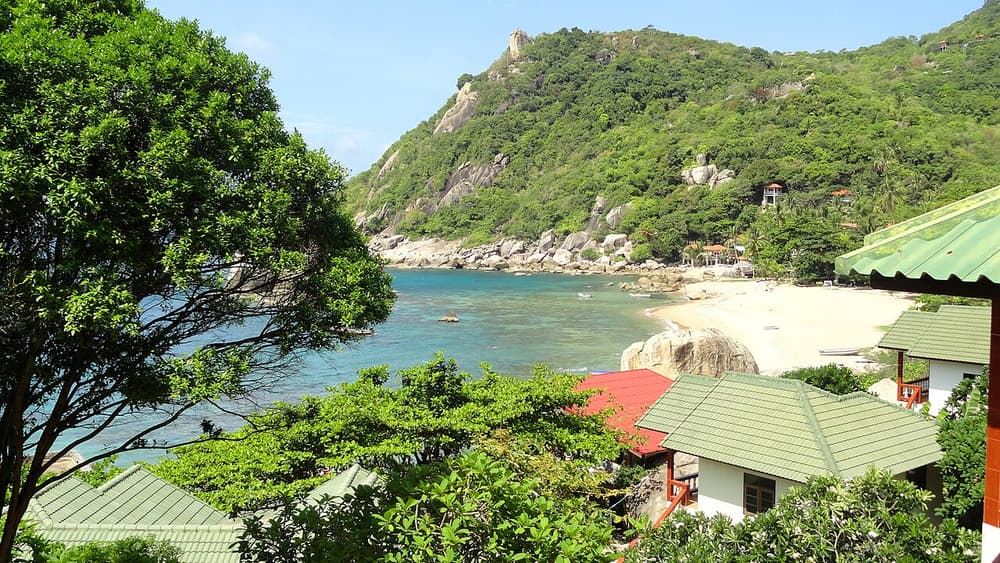
Koh Tao in pictures
How long to stay and where to base yourself
Plan around what you want to do underwater. A try-dive and a snorkel trip fit into two full days; an Open Water course needs three to four, plus a day either side for travel. Many people stay a week.
Sairee, the long west-coast beach, has most of the dive schools, bars and restaurants. Mae Haad is the pier village, practical and a little quieter. Chalok Baan Kao in the south is a laid-back bay with its own schools. The east-coast bays — Tanote, Hin Wong, Ao Leuk — are secluded, with good snorkelling off the rocks and steep roads in.