Learning to dive
The Open Water Diver course (PADI, SSI and other agencies are all recognised worldwide) combines theory, skills practice in shallow water and four open-water dives, certifying you to 18 metres. A try-dive gives you one or two shallow dives under direct supervision with no certificate. Certified divers can take the two-day Advanced course or join “fun dives” to the pinnacles and the wreck. You must be able to swim and be in reasonable health.
Snorkelling and freediving
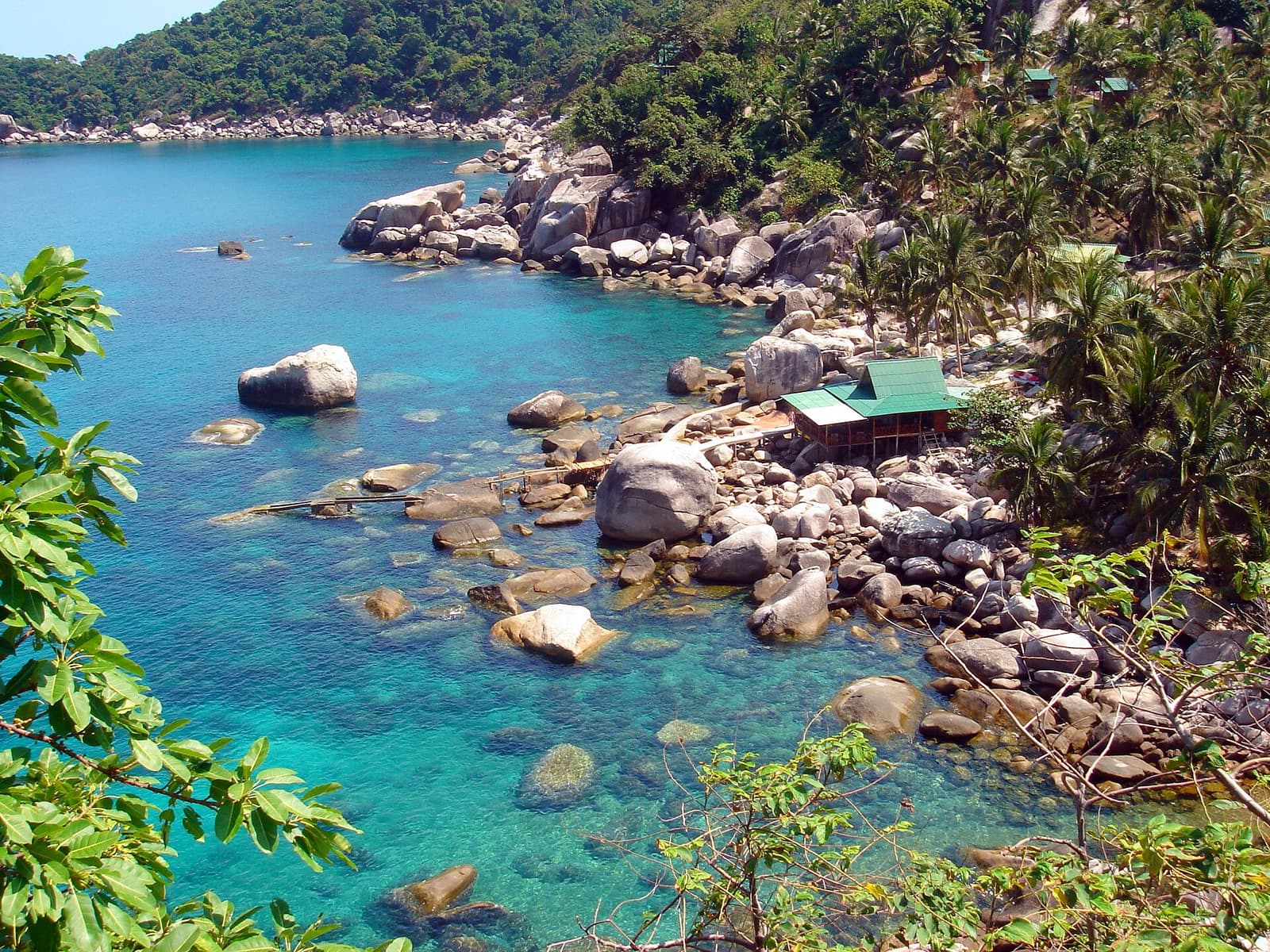
Good snorkelling from shore is found at Shark Bay, Tanote, Ao Leuk, Hin Wong and Mango Bay. Boat trips link several in a day. Koh Tao is also a leading centre for freediving, with two-day beginner courses that teach breathing, relaxation and descents on a line.
On land
Trails and concrete tracks lead to viewpoints including Fraggle Rock, Mango Viewpoint and West Coast Viewpoint; none takes more than an hour, but all are steep and hot. The island’s granite boulders offer bouldering and a few bolted climbing routes, and paddleboards and kayaks are rented on Sairee.
Practicalities and safety
- ATMs are in Sairee and Mae Haad. Fresh water is scarce: take short showers and refill bottles at refill stations.
- There are clinics but no full hospital; serious cases go to Samui by boat. Make sure your insurance covers diving.
- Road accidents are the island’s main hazard for visitors.
- Look after your drinks and do not swim after drinking.
- Join a beach or reef clean-up — several schools run them weekly. More in responsible travel.
Sample plans
2 days: taste of Tao
Day 1: arrive by morning catamaran, settle in at Sairee and walk up to a viewpoint for sunset. Day 2: early-bird snorkelling trip around the island and Koh Nang Yuan, or a one-day try-dive.
4 days: get certified
Three to four days of Open Water course with afternoons free. Use the gaps for Shark Bay at high tide and the John-Suwan viewpoint, and celebrate on Sairee on the last night.
6 days: diver’s week
Open Water followed straight away by fun dives to Chumphon Pinnacle and the Sattakut wreck — or the Advanced course — with a rest day on Tanote Bay before the boat to Koh Phangan.