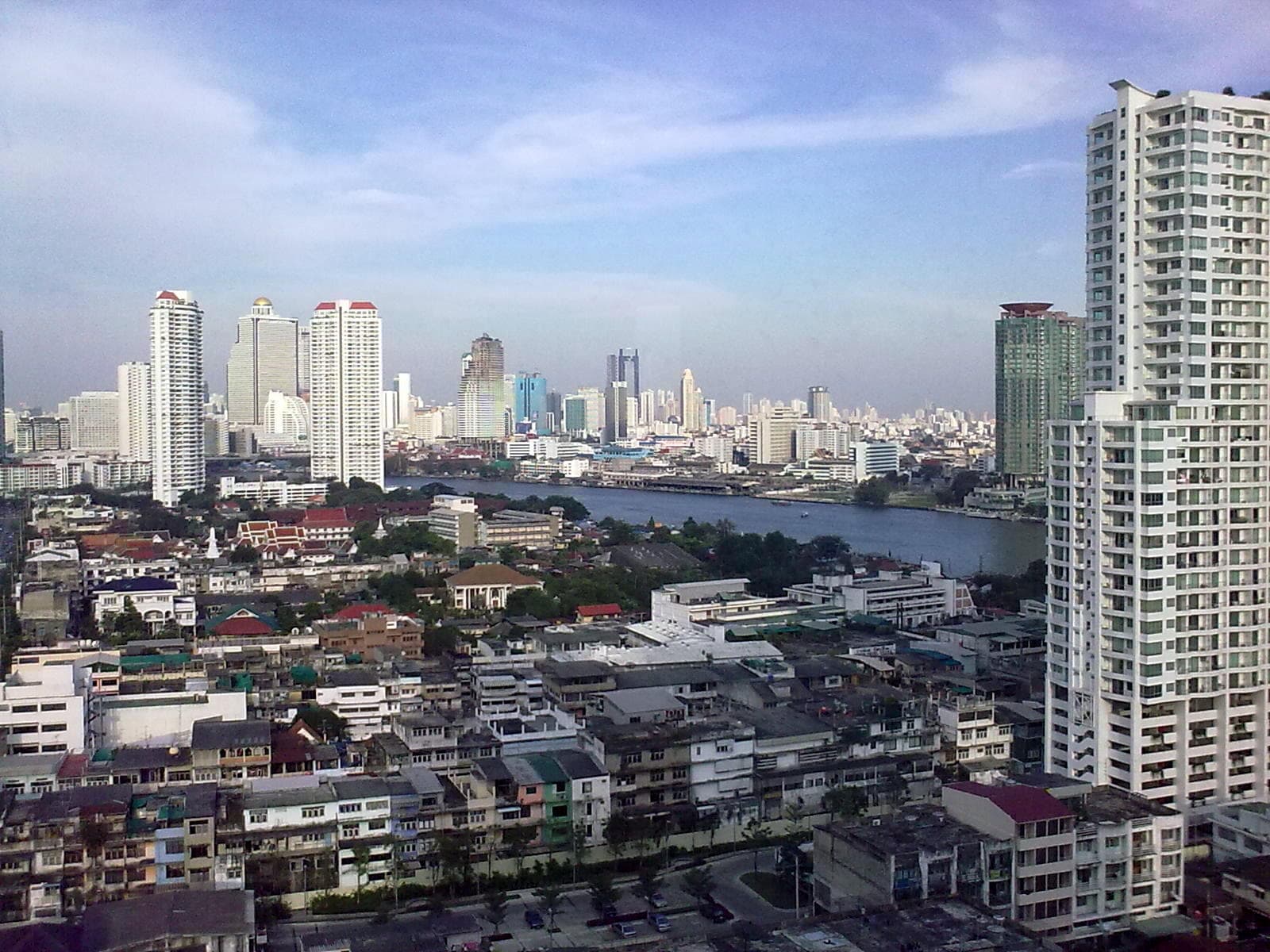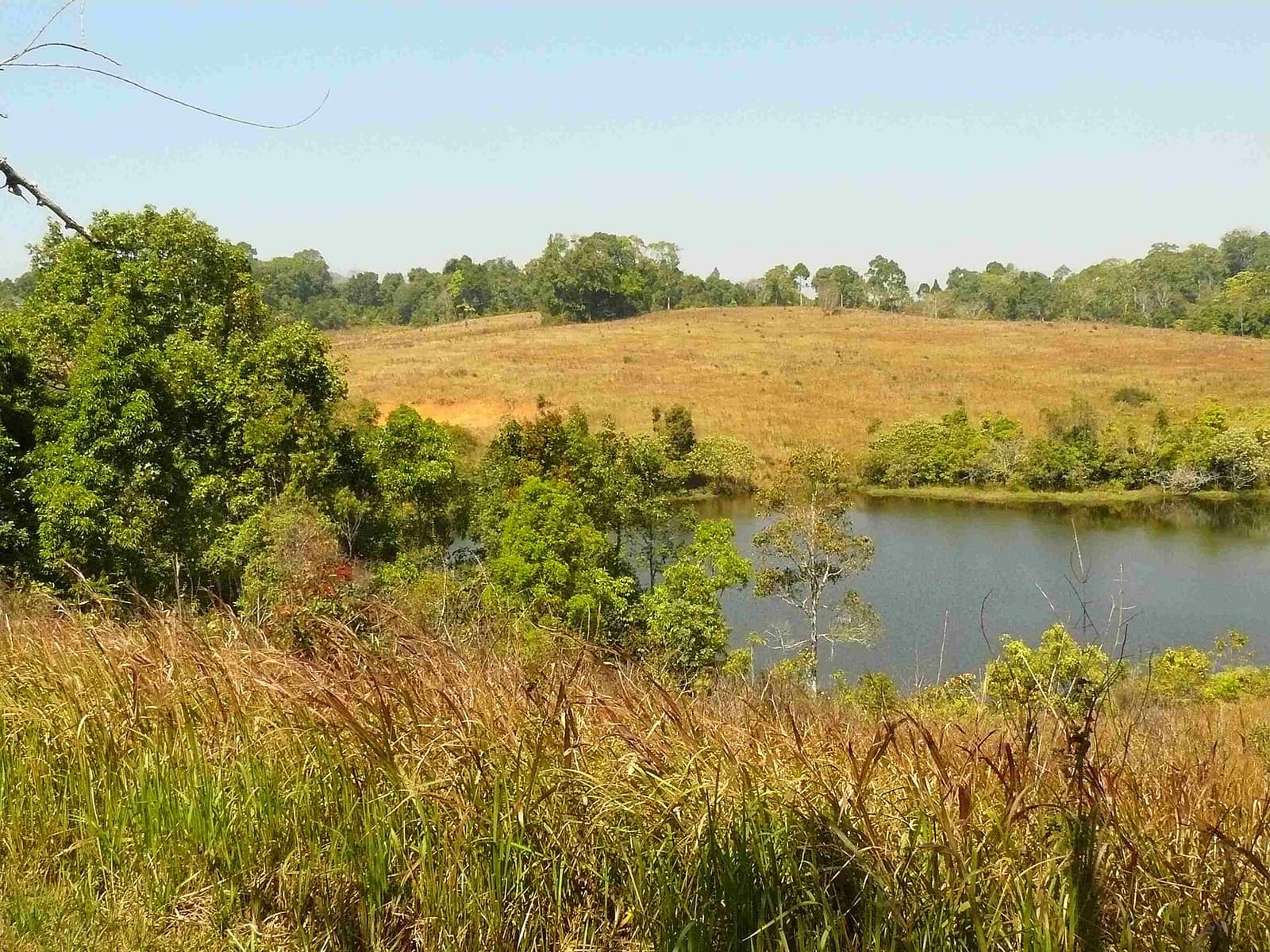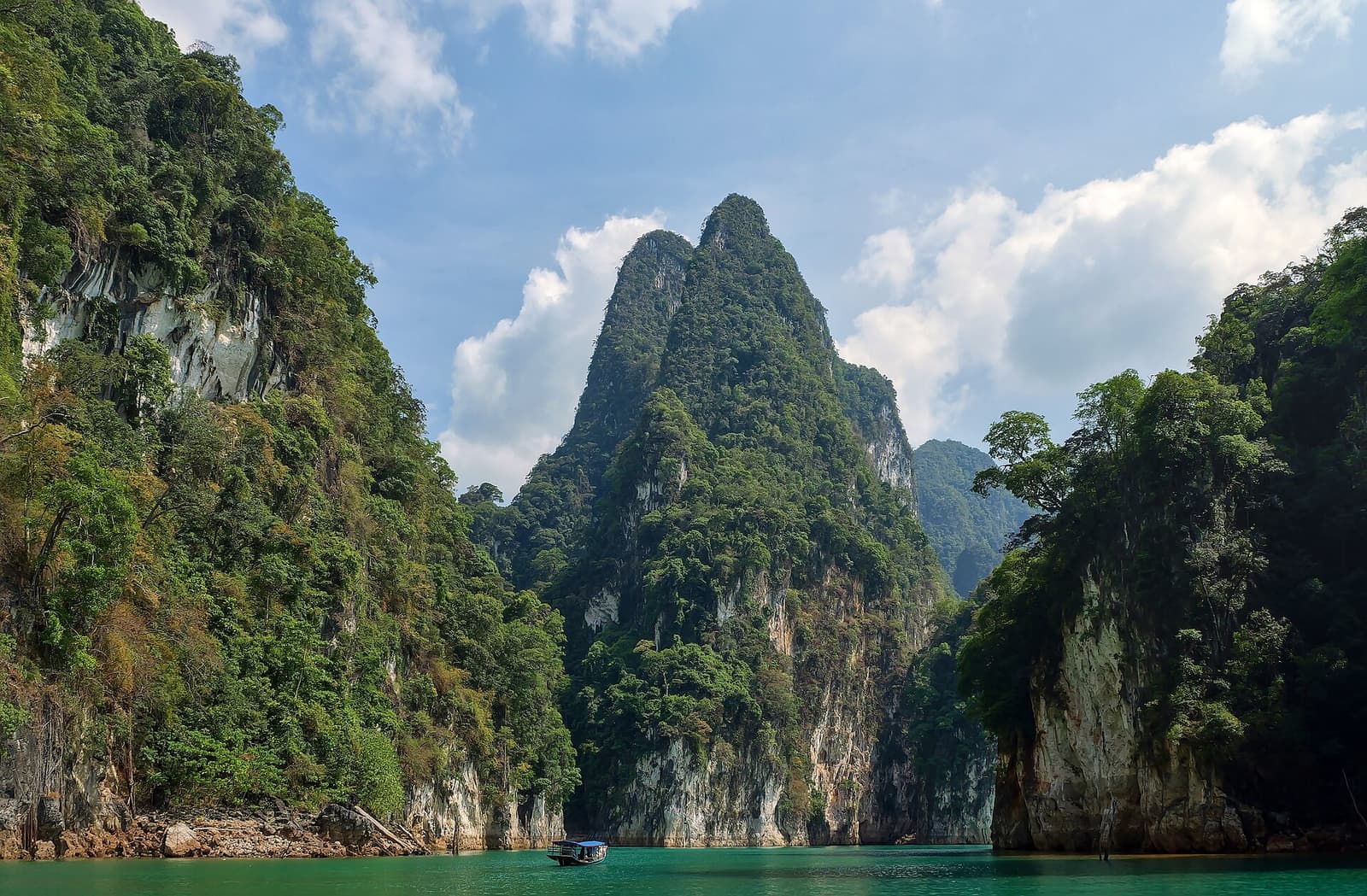
Kanchanaburi province stretches from the rice plains west of Bangkok to the forested mountains of the Myanmar border, and holds some of Thailand’s largest protected forests. The provincial town lies where two rivers, the Kwae Yai and Kwae Noi, meet. Travellers know it for two very different reasons.
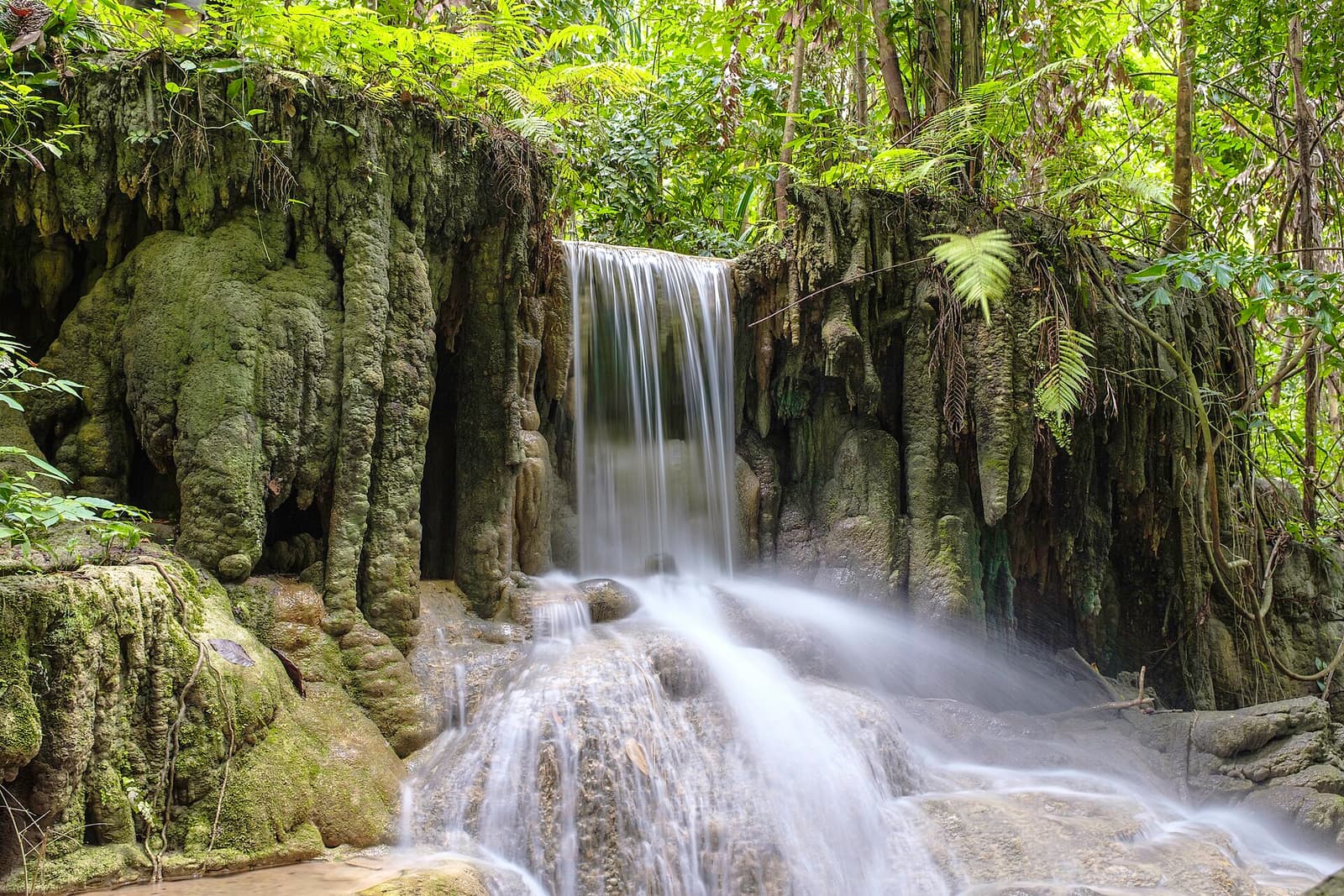
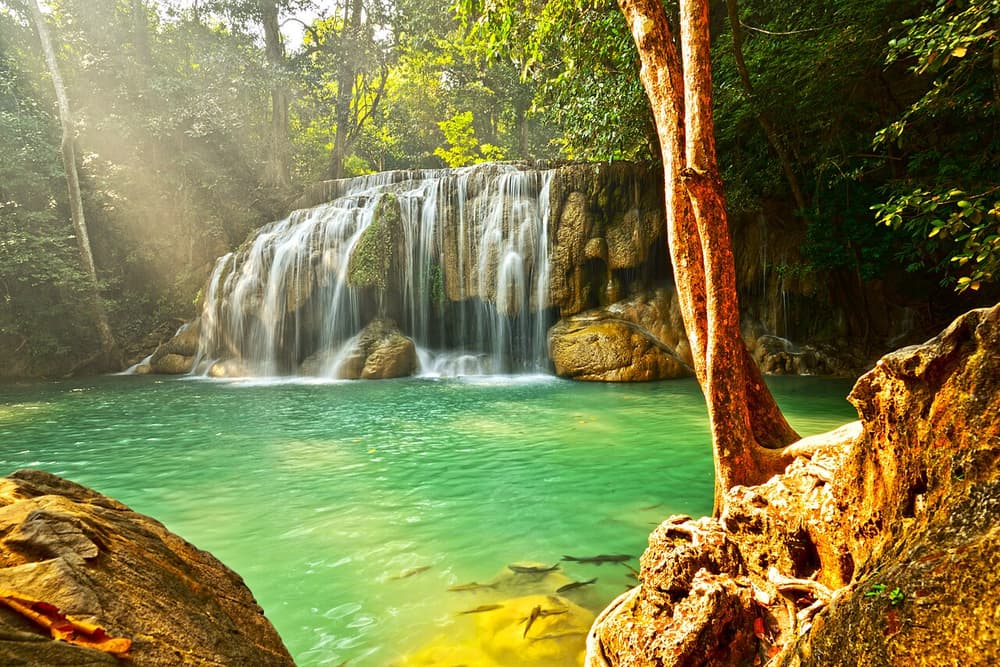
The first is water. Erawan National Park, an hour north, has the country’s most beautiful waterfall: seven limestone tiers of milky blue pools linked by a forest trail, with swimming allowed in most of them. The rivers are calm enough for kayaking, stand-up paddling and bamboo rafting, and lined with floating raft houses to stay in.
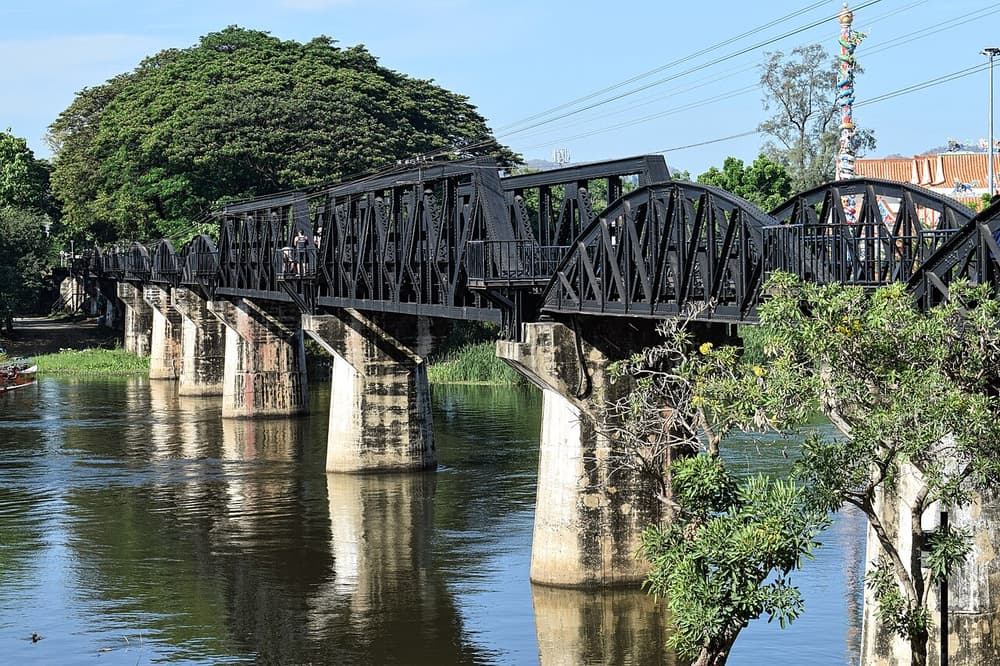
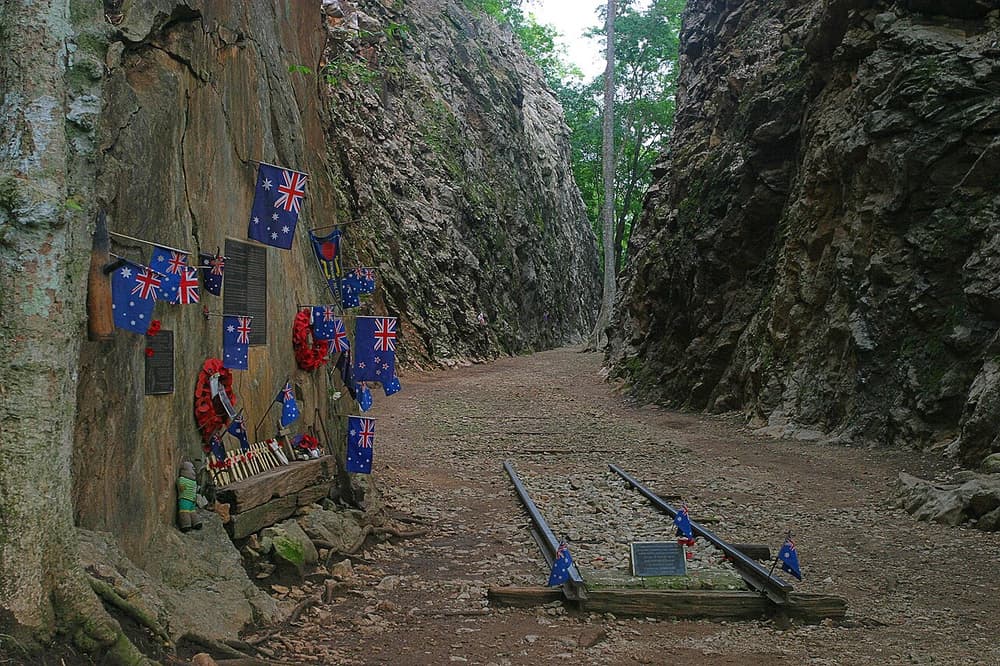
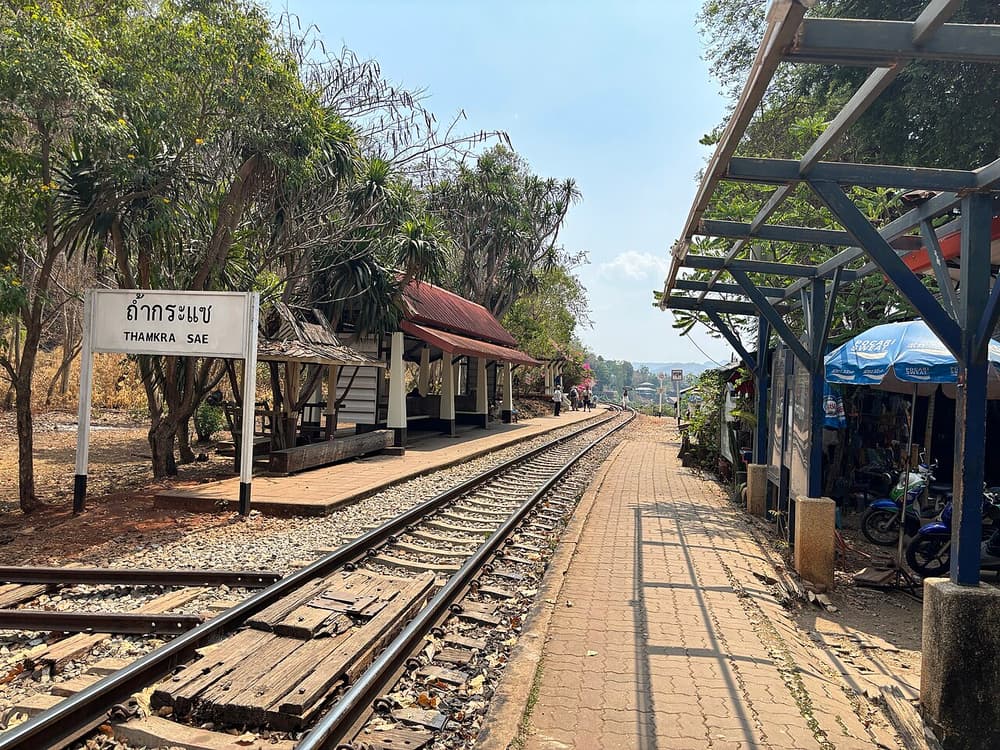
The second is the Second World War. In 1942–43 the Japanese army forced Allied prisoners of war and Asian labourers to build a railway from Thailand to Burma; tens of thousands died. The Bridge over the River Kwai, the cemeteries and above all the memorial walking trail at Hellfire Pass tell that story with dignity. Part of the line still operates, and the slow train over the wooden Wang Pho viaduct is one of Thailand’s great rail journeys. Most people visit from Bangkok; staying two nights is far better.
Highlights
- Climb and swim all seven tiers of Erawan Falls
- Ride the slow train over the Wang Pho viaduct
- Walk the memorial trail through Hellfire Pass
- Kayak or paddleboard on the River Kwai
- Sleep in a floating raft house
- Cycle the quiet lanes and riverbanks outside town
Kanchanaburi & Erawan in pictures
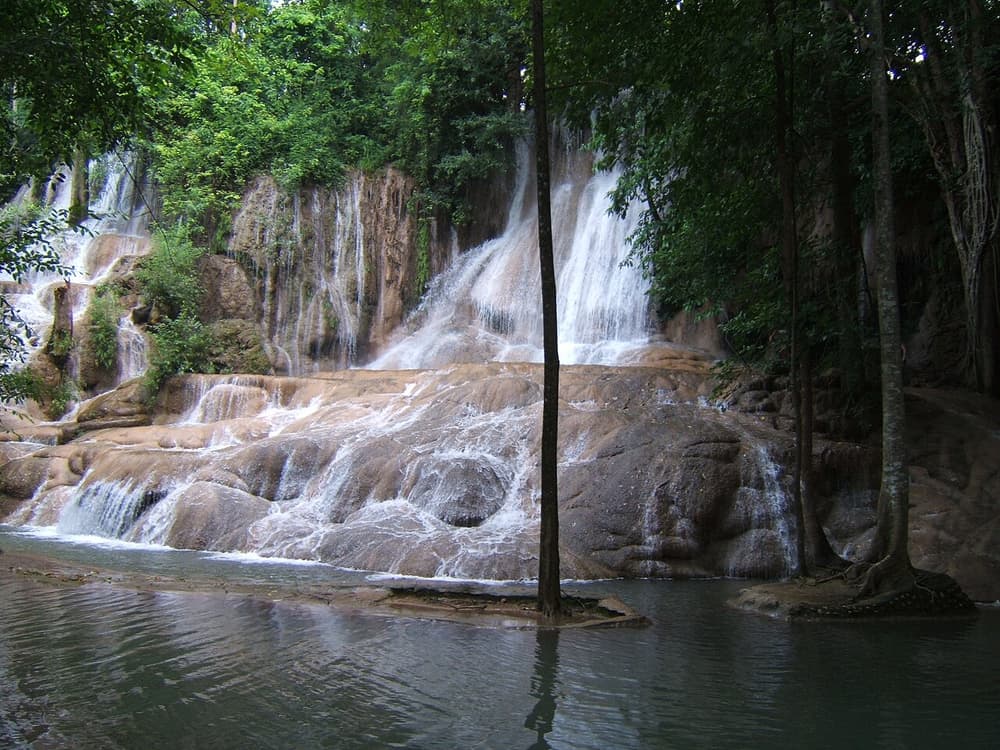
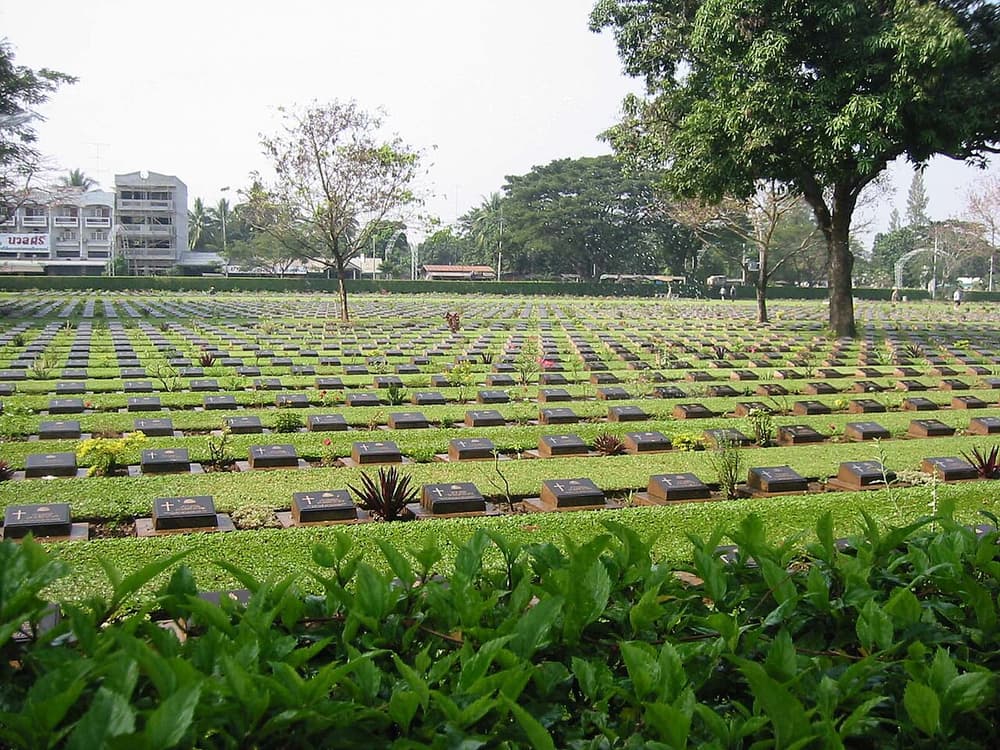
How long to stay and where to base yourself
A day trip from Bangkok is possible but means six hours on the road. Two nights allow a full day at Erawan and a full day for the railway and Hellfire Pass; a third lets you paddle the river or stay in the Sai Yok forest.
Guesthouses and small hotels line the river along Mae Nam Kwae Road in town, close to the bridge and the station. For atmosphere, choose a raft house or riverside resort upstream towards Sai Yok — peaceful, but you will rely on the resort’s boats and transfers.