Where to base yourself
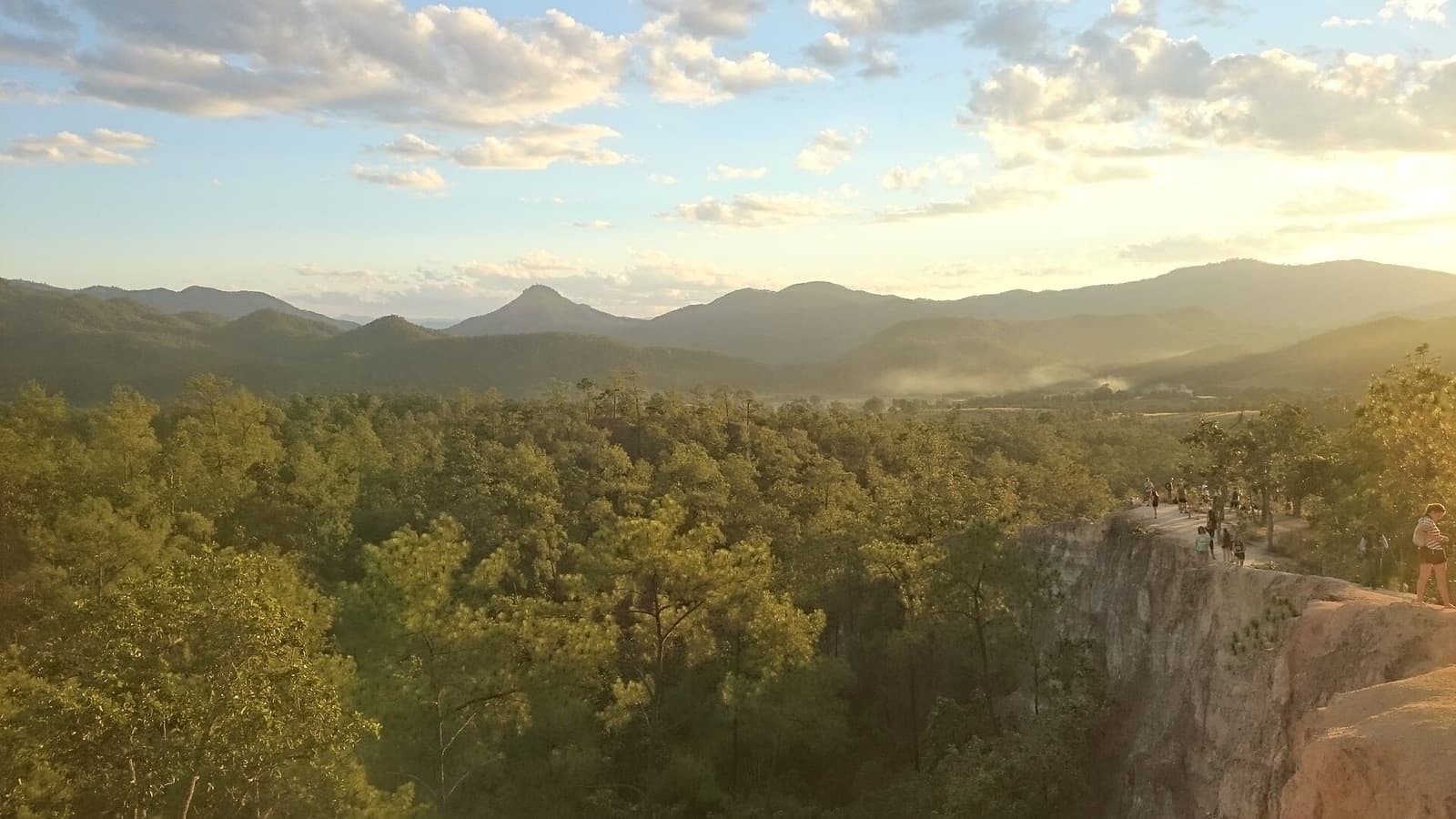
The centre around the golden clock tower and night bazaar has guesthouses, cafés and the Saturday walking street. Riverside resorts on the Kok are quieter and more spacious. Doi Mae Salong and the villages near Phu Chi Fa have simple hillside lodgings for those who want the dawn views without a 4 am start.
Trekking and cycling
The hills north and west of town hold Akha, Lahu, Lisu and Karen villages linked by forest trails. Choose operators that work with the communities they visit and keep groups small. Cyclists will find quiet lanes along the Kok River and demanding climbs towards Mae Salong. The trails are dry and cool from November to February and slippery in the rains.
Food
Look for khao soi, nam ngiao (a tangy tomato and pork noodle soup that is the local speciality), northern sausage and, in Mae Salong, Yunnanese braised pork with steamed buns. The night bazaar’s food court is an easy, inexpensive dinner with live music.
Practicalities
- ATMs are plentiful in town but scarce in the hills; carry cash.
- Mountain roads are steep and winding. Only ride a motorbike if you are licensed, insured and experienced.
- The border areas are peaceful for visitors, but carry your passport; there are occasional checkpoints.
- Tham Luang, the cave known for the 2018 rescue, can be visited near Mae Sai; inner sections are generally closed in the wet season.
Sample plans
1 day: temples and art
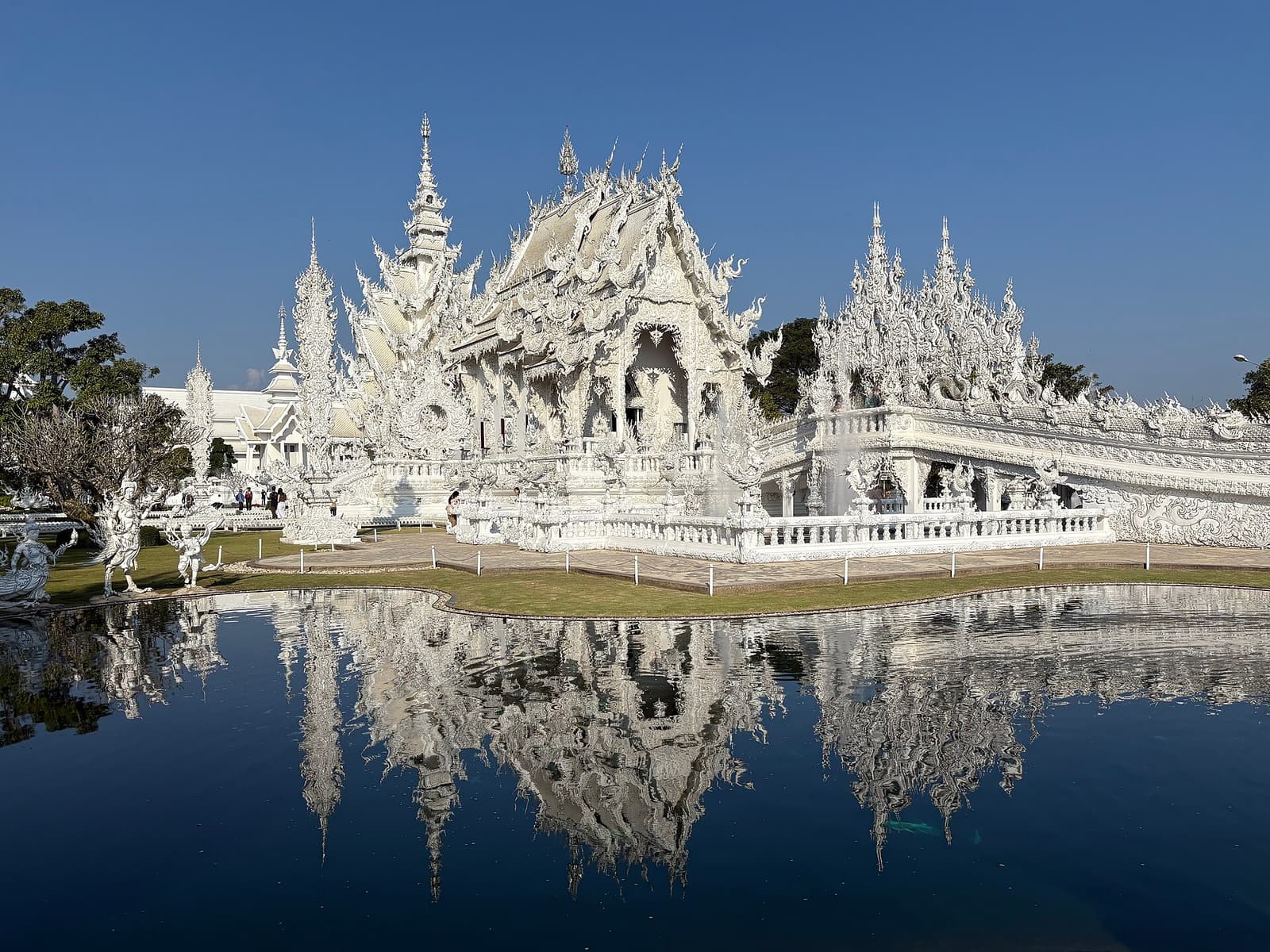
White Temple at opening time, then Baan Dam and the Blue Temple, with a stop at a tea plantation for lunch. Evening at the clock tower light show and the night bazaar.
2 days: add the Golden Triangle
Day 2: drive north to Chiang Saen’s ruined chedis and the Golden Triangle viewpoint, take a longtail on the Mekong and return through Doi Mae Salong for sunset over the tea terraces.
3 days: sunrise and a trek
Leave before dawn for Phu Chi Fa, or spend the third day on a guided half-day jungle trek with a waterfall swim. Continue to Laos by slow boat or return to Chiang Mai.