Where to base yourself
Thanarat Road, the approach to the northern gate, has the widest choice, from budget lodges to resorts. Pak Chong itself is handy for the station and its night market. Camping at Lam Ta Khong or Pha Kluai Mai inside the park puts you among deer and night sounds; bring warm clothes from November to February.
Trekking
Trails are narrow, humid and often unmarked. Half-day walks typically cover 4–8 km with stops to track gibbons or check a fruiting tree; full days add a second trail and waterfalls. Wear long trousers, closed shoes and neutral colours, and carry at least a litre and a half of water. Stay with your guide: every year visitors lose the path.
Around the park
Just outside the northern boundary, an estimated two to three million wrinkle-lipped bats leave their cave each evening in a ribbon that takes half an hour or more to pass. The surrounding countryside has farms, vineyards and cafés aimed at Bangkok weekenders, and is far busier on Saturdays and public holidays.
Practicalities
- There are simple restaurants at the visitor centre and campsites; nothing elsewhere inside the park.
- Do not feed the macaques by the road — fines apply, and fed monkeys become aggressive.
- Carry cash for fees; cards are not reliably accepted.
- Mornings can be 12–15°C in December and January.
- Read our responsible travel guide on watching wildlife well.
Sample plans
1 day from Bangkok
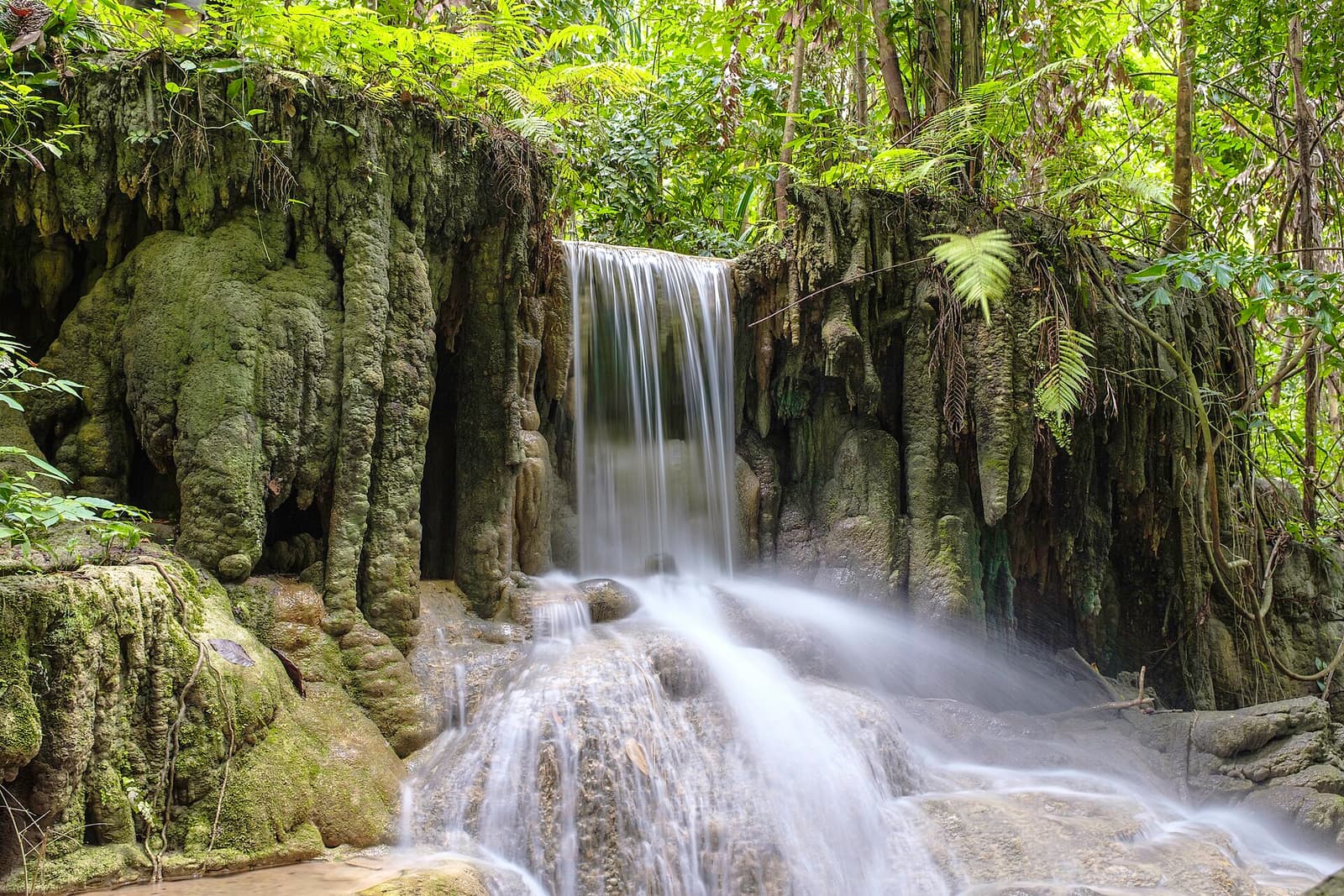
Early departure, a guided walk on one of the trails near the visitor centre, lunch in the park, Haew Suwat waterfall and a slow drive past the salt licks before returning.
2 days: wildlife properly
Arrive by midday and join an afternoon tour to a spring pool and the bat cave at dusk. Next day, enter the park at dawn for gibbons and hornbills, trek to a waterfall, and stay for the elephants’ hour before a night safari.
3 days: both ends of the park
Add a morning at Pha Diao Dai for the mist, then drive south through the park to Haew Narok and leave by the southern gate — or spend a night camping at Lam Ta Khong.