Where to base yourself
Pai town has the food, the market and the nightlife. The east bank of the river, reached by bamboo footbridges in the dry season, is quieter. Resorts and bungalows in the surrounding rice fields have the best views. Soppong suits cavers and trekkers; Mae Hong Son is calm and very local.
Trekking and caving
Pang Mapha district is riddled with caves and is one of the best areas in the north for multi-day treks to Lahu, Lisu and Karen villages with few other visitors. Go with a local guide; trails are unmarked. From Pai itself, the hike to Mae Yen waterfall is a full day following a stream with many crossings.
The Mae Hong Son Loop
The circuit has several thousand bends and long gaps between fuel stations. A car with a driver is the relaxed way to do it; self-drivers need an international driving permit. Allow at least four days.
Food and practicalities
- The evening walking street is the place to eat: grilled skewers, khao soi, Yunnanese dumplings and Shan dishes such as khao sen noodle soup.
- ATMs are in Pai and Mae Hong Son towns only; carry cash to villages.
- Nights from December to February are cold — close to freezing in the high villages. Bring a jacket.
- Pai has a small hospital; serious injuries are transferred to Chiang Mai. Check that your insurance covers what you plan to do.
Sample plans
2 days: the valley
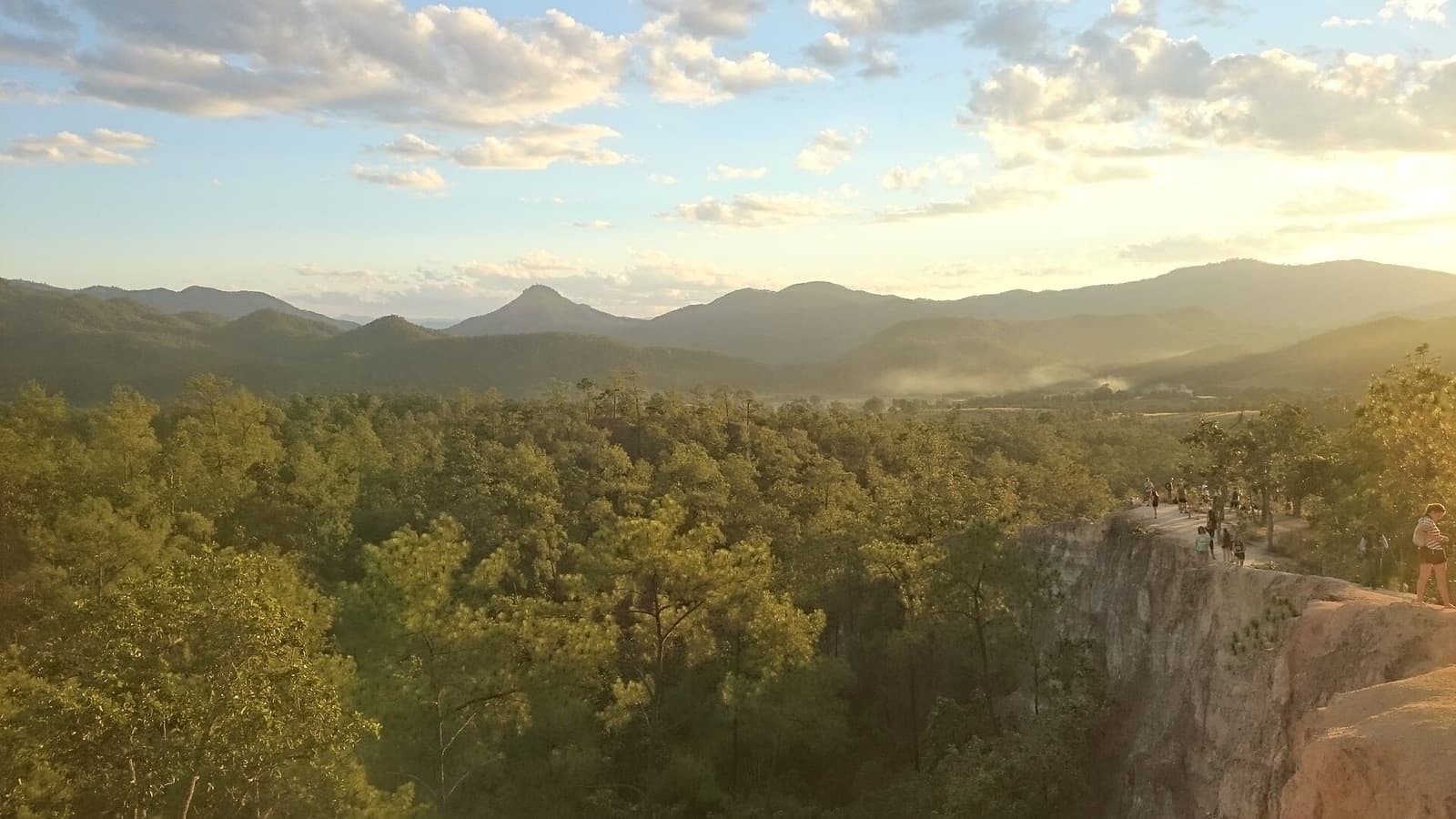
Day 1: Sai Ngam hot spring in the morning, the bamboo bridge and a waterfall after lunch, Pai Canyon for sunset and dinner on the walking street. Day 2: early start for Ban Jabo and Tham Lod, back for an afternoon by the river.
3 days: slow Pai
Add a day with no plan beyond a long breakfast, a bicycle ride through the rice fields, Tha Pai hot springs and a sunset viewpoint.
5 days: on to Mae Hong Son
After Pai, travel via Soppong to Mae Hong Son for two nights: Wat Chong Kham at dusk, Doi Kong Mu at dawn and a day out to Ban Rak Thai and Pang Ung lake. Fly or drive back to Chiang Mai.